
Arakan News Agency
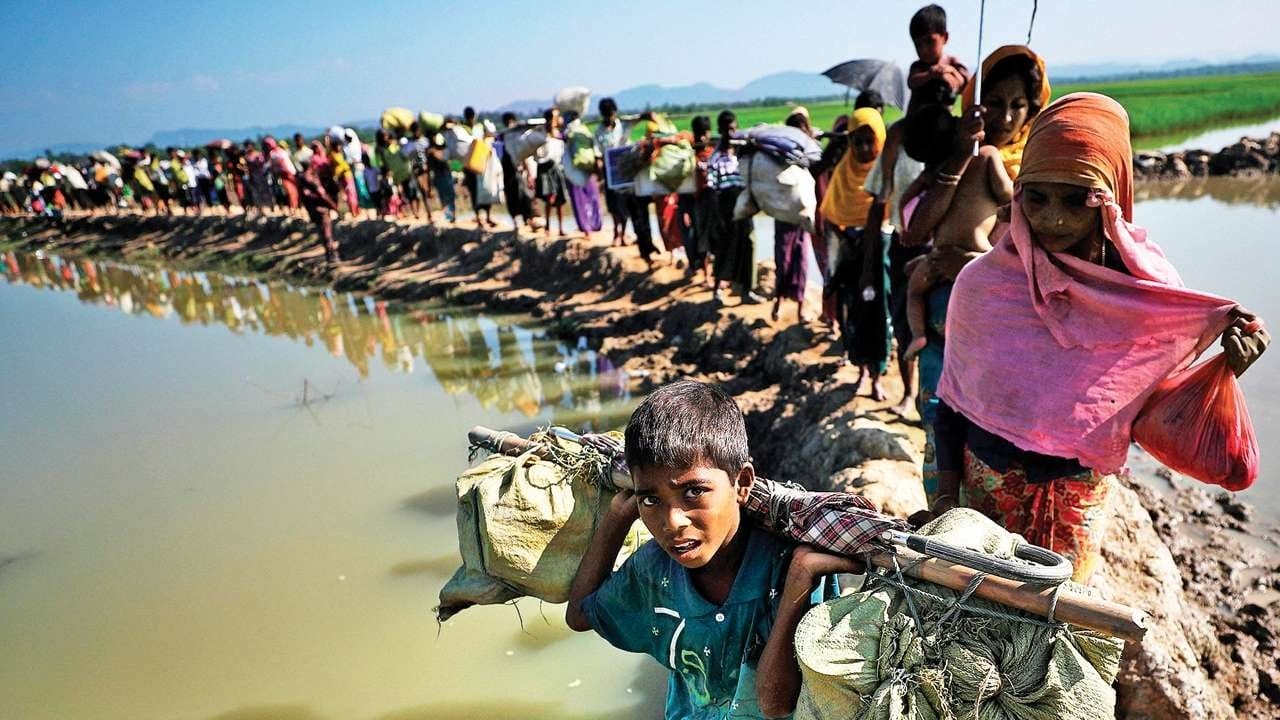
Home is where the heart is. This is true for Rohingya refugees for whom Jaipur has been a home for over a decade now. And still they dream to return to their motherland Rakhine in Myanmar.
“Jaipur has been good to us. India, as a country, welcomed us when we were shunned away by others. However, all of us have pinned our hopes on our return… At least, some day,” said 67-year-old Lalmia.
He has been living in Jaipur since 2007 and though he and others talk about going home, they also admit that it is a fading dream.
Jaipur for the past one-and-a-half decade played host to 105 Rohingya families – most of them living at the Welcome Colony and Mehnat Nagar in the Hasanpura area. While most of them are refugees, a few are yet to get their refugee card. Life, though, is not easy – living in small shanties and earning a livelihood by rag picking, rickshaw pulling etc.
The latest entrants, six months ago, are three men in their late 30s. They have been living in hiding as they are yet to get a refugee status and until then they are offenders for crossing Indian border illegally. Mushtaq (name changed), who had a huge farmland and a farmhouse in Maungdow district in the Rakhine state of Myanmar, was forced to live in a shanty after his land was acquired by the government. A riot in January-February 2015 forced him to sail for 15 days without food and water in a boat towards ‘Hindustan’.
“As the Muslim Ummah (Islamic Countries) Malaysia, Bangladesh and Pakistan and for that matter Saudi Arabia has shut door on us and left us to die, I decided to reach Hindustan which has been friendlier towards my fellow nationals,” said Mushtaq, who speaks fluent Bengali.
Once fond of cars, he is living in one 6 x 10 feet tiny room submerged in rain water up to few inches with six other Rohingyas in one of the narrow lanes of Mehnat Nagar. They are yet to come to terms with the recent crisis, which saw hundreds of them drifting in boats for days without food and water in the India Ocean while escaping riots in Myanmar. Images of boats carrying corpses jitters them.
The oldest family in Jaipur arrived in 2000 escaping death when their entire village was burnt by the ‘969’, a Buddhist extremist group, to avenge their demand of restoring fundamental rights.
Recalling the horror, Syed Alam of Toungup district in Myanmar, was one among the few who could save his live pretending to be dead among the corpses. He lost most of his family members, relatives, friends and livestock in the incident. Those survived the frenzy crossed Bangladesh border on foot for days.
“We were arrested in Bangladesh for crossing their border illegally. After some months, they released on a condition to return Myanmar. We had no choice to see Hindustan as the only option where we were sure of food and shelter,” said Alam who crossed border bribing jawans on either side. Later, he married to a Rohingya refugee living in Jammu.
He applied for refugee status before the United Nations High Commissioner for Refugees in New Delhi and got the status after three rounds of verification. They have been living here without the fear of ‘969’. Terming everything is smooth for them will be an exaggeration. Very few families have been able to mingle with the locals while the rest is seen as ‘Bengali Muslims’ from Bangladesh. “For us digital refugee cards are the most important document which ensure us both safety and security,” said Nabi Hussain, 60, another refugee who occasionally does supporting jobs to prevent begging. Their day is incomplete without checking the Myanmar news websites.
The recent government decision of imposing a ban on fishing and closing down medical centres in Rohingyas Muslim areas on Eid-ul-Fitr had turned festive mood sour.
Incidents of discrimination within the community and outside are very common. Often they were seen as illegal Bangladeshi migrants and subjected to verbal and physical abused. Most of the refugees coming here were from lower and middle class as rich refugees are easily accepted by the countries like Australia, New Zealand, and Singapore.
Source : TOI


