
Arakan News Agency
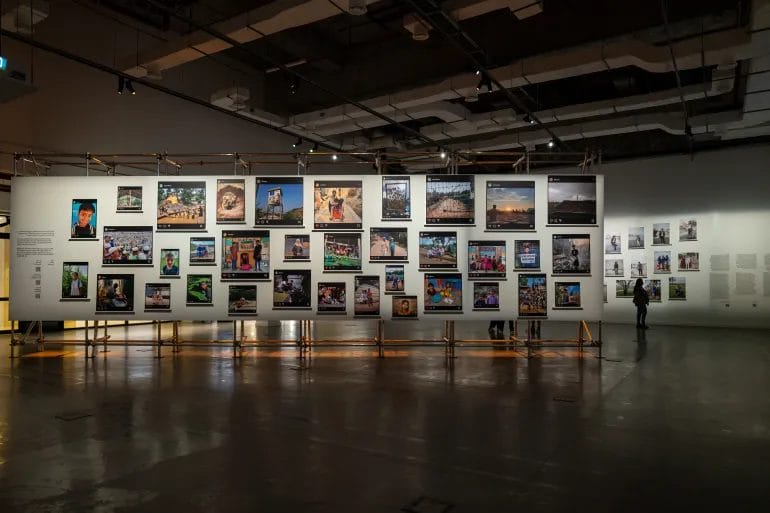
ISTANBUL – Using art to raise awareness about the oppressed Rohingya Muslims, an American award-winning photographer holds an exhibition in Istanbul to offer insights into the plight of the religious Muslim minority in Burma.
“Inside Burma [Myanmar], the conditions the Rohingya live in are quite like apartheid… They are confined to one geographic area; they can’t come, they can’t go… They receive very little medical assistance or education for their children,” Greg Constantine told Anadolu Agency on Sunday, July 12.
Titled, Exile to Nowhere, the exhibition displays a collection of photos reflecting the suffering of Rohinya Muslims in the Buddhist-majority country.
Gathered form Constantine’s 12 visits to Burma, the exhibition was previously held in Washington, Bangkok and Geneva to shed light on persecution and abuse faced by Rohingya Muslims.
Starting his first visit to Rohingya communities in Myanmar’s volatile Rakhine state in 2006, the American photographer later made eight subsequent trips to the area.
“I was so shocked by the situation that the Rohingya were living in there,” says Constantine, accusing the international community of paying little attention to the community.
“I knew it was a story I want to dedicate a lot of time to.”
Described by the UN as one of the world’s most persecuted minorities, Rohingya Muslims are facing a catalogue of discrimination in their homeland.
They have been denied citizenship rights since an amendment to the citizenship laws in 1982 and are treated as illegal immigrants in their own home.
The Burmese government as well as the Buddhist majority refuse to recognize the term “Rohingya”, referring to them as “Bengalis”.
Rights groups have accused the Burmese security forces of killing, raping and arresting Rohingyas following the sectarian violence last year.
Suffering
——————-
The exhibition, which is held at Galata Fotografhanesi in Istanbul’s Beyoglu district, runs till July 30.
“The purpose of this exhibition is not to celebrate the photography, it is the last objective of all of this. It is actually to use photography as a way to engage people and promote better understanding [about the Rohingya.],” Constantine says.
“I focus on the root cause of the problem and that is the oppression that they face in their homeland – which is Burma.
“Unless things change there, you are continually going to have this flow of Rohingya out of Burma to other countries,” he added.
Among scenes captured by Constantine are photos of families confined to bamboo shacks, malnourished potbellied children walking among slums, and Rohingya gathered in impoverished conditions, trying to eke out an existence from the land.
One of the photos shows three covered Rohingya women staring out of the darkness.
“I like to talk to people quite a lot. And I always ask people if they are compatible with me taking pictures [so as not to invade their privacy],” he says.
Over the past weeks, thousands of Rohingya refugees fled Burma and Bangladeshi to land in Malaysia, Indonesia and Thailand where they fell in the custody of respective governments.
An estimated 120,000 Burmese refugees fled to live in 10 camps along the Thailand-Burma border, recent immigration data showed.
Between 2012 and 2013, Buddhists mob attacks have left hundreds of Rohingya Muslims killed and evacuated more than 140,000 from their homes.
The violence has displaced nearly 29,000 people, more than 97 % of whom are Rohingya Muslims, according to the United Nations.
Many now live in camps, adding to 75,000 mostly Rohingya displaced in June 2012, after a previous explosion of sectarian violence.
Source : onislam


