Arakan News Agency
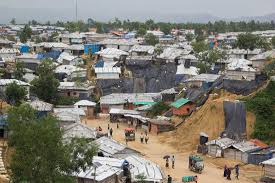
The Myanmar government would shut down three camps has raised eye brows of international community, including United Nations. In fact, one camp shelters ethnic Rakhine community and another accommodate Rohingya Muslims. The fate of thousands of internally displaced people (IDP) in Myanmar’s Arakan state remains uncertain. Thaung Tun Myanmar’s National Security Adviser unveiled no exit plan, except shutting down of three camps. He said nothing about measures to relocate the refugees or about aid or facilities to be provided.
Despite international forum’s concern, the Myanmar authorities are determined to shut down the IDP camps. Nothing has been spelled about what happens to them next. With immediate outrage over the issue of pushing the Arakan IDP into uncertainty, it said the Myanmar will once again invite another crisis.
The IDP sought shelter five years ago amid violent conflict between Buddhists and Muslims. Many fled the country, retreating to the Bangladeshi frontier and slipped through porous borders by human trafficking agents. Myanmar’s defacto administrative head Suu Kyi had last year chosen Kofi Annan, a fellow Nobel laureate and former chief of United Nations, to head a Arakan Commission seeking solutions to the crisis in Arakan state.
The commission was mandated to examine ways to develop the state, strengthen civic institutions, provide humanitarian assistance, seek reconciliation and prevent further conflict. But the mission was flawed from the start, restrained by a law that doesn’t recognize the Muslim Rohingya as citizens. Myanmar is a predominantly Buddhist society and nationalist intolerance of other religions is rife. Annan’s commission recommended that the government formulate a comprehensive plan to close the displacement camps as part of any attempt to curb festering communal tensions. Annan agreed.
It was agreed to relocate more than 120,000 IDP in the present camps had “shown little progress” in Arakan state since 2012. The commission identified 335 households within the IDP camps, a mix of Rakhine and Muslim people who it said ought to be allowed to return to their homes or be relocated elsewhere as an initial expression of ‘goodwill’.
The international criticism of Myanmar over its official mistreatment of Arakan’s million-plus Rohingya, despite their families having lived in Myanmar for generations, are denied citizenship and face severe restrictions in movement and access to education and healthcare.
The persecution in Arakan state, ever since the military–reacting to militant Rohingya attacks on police border posts last October–launched a bloody crackdown in north Arakan that claimed hundreds of lives.
UN investigators concluded that security forces might have carried out “crimes against humanity” as well as ethnic cleansing. Nobel laureate Suu Kyi rejected the accusations, calling “ethnic cleansing” “too strong an expression”.