
Arakan News Agency
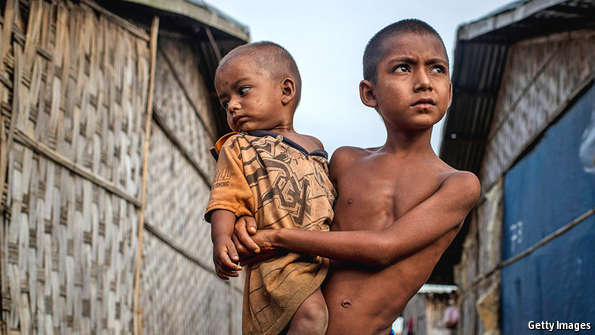
The government with assistance from different development partners, including UNICEF, has launched a programme to provide nutrition support for Rohingya children who are suffering from severe acute malnutrition (SAM).
Under the ‘Nutrition Action Week’ programme, around 17,000 under five Rohingya children, who fled from persecution in Myanmar, will get immediate nutrition support, according to a UNICEF release.
The preliminary findings of a nutrition assessment conducted at Kutupalong camp last month showed a 7.5 percent prevalence of life-threatening severe acute malnutrition – a rate double to what was witnessed among Rohingya children in May 2017.
“The government along with the development partners, including UNICEF, will do everything possible to ensure that the Rohingya children get the required nutrition support,” State Minister for Health and Family Welfare Zahid Maleque said after launching the programme.
The Nutrition Action Week interventions are taking place in the registered camps, makeshift and new settlements to speed up coverage of nutrition services through 70 teams consisting of 560 members in 70 distribution sites across the settlements.
“This programme will bring much needed support for the Rohingya children as well as children from the host community,” said Edouard Beigbeder, Representative, UNICEF Bangladesh.
During this weeklong exercise, at least 80 percent of 176,756 children aged six to 59 months will be given vitamin A capsules, 80 percent of 118,427 children aged 24-59 months will be provided deworming tablets, 176,756 children aged 06-59 months will undergo nutrition screening and malnourished children will be referred for nutrition treatment programmes.
Information on important breastfeeding practices and appropriate feeding practices will also be given to the mothers.
At present, the government, UNICEF and partners are jointly providing nutrition support and treatment for over 6,500 acutely malnourished children through 30 outpatient nutrition treatment centres and four stablisation centres.


