Arakan News Agency
Rohingya Muslims say Myanmar soldiers raped or sexually assaulted dozens of women in a remote village in the northwest of the country during the biggest upsurge in violence against the persecuted minority in four years.
Eight Rohingya women, all from U Shey Kya village in Arakan State, described in detail how soldiers last week raided their homes, looted property and raped them at gun point.
Reuters interviewed three of the women in person and five by telephone, and spoke to human rights groups and community leaders. Not all the claims could be independently verified, including the total number of women assaulted.
The crisis in northern Arakan marks the biggest challenge Myanmar’s six-month-old civilian government has faced, and raises questions over de facto leader Aung San Suu Kyi’s ability to maintain control of the country’s military, observers and diplomats say.
The United States has raised the issue directly with Myanmar’s Foreign Ministry and would like to see authorities “investigate these allegations fully and take whatever actions against the perpetrators are warranted,” State Department spokesman Mark Toner told a briefing in Washington.
A State Department official who spoke on condition of anonymity said Scot Marciel, the U.S. ambassador to Myanmar, “has been raising the issue consistently since the attack” and spoke to the Foreign Ministry about it on Thursday.
Suu Kyi’s relationship with the army remains strained because of the constitution, drafted by the military in 2008, which bars her from the presidency. It also guarantees the army key ministerial posts, including defense, border affairs and home affairs.
Diplomats and United Nations officials say privately that the Oct. 9 attacks and subsequent crackdown have shattered years of work rebuilding trust between the Muslim and Buddhist communities in Arakan after ethnic and religious violence broke out there in 2012.
‘THEY TORE MY CLOTHES’
A 40-year-old woman from U Shey Kya told Reuters that four soldiers raped her and assaulted her 15-year-old daughter, while stealing jewelry and cash from the family.
“They took me inside the house. They tore my clothes and they took my head scarf off,” the mother of seven told Reuters in an interview outside her home, a cramped bamboo hut.
“Two men held me, one holding each arm, and another one held me by my hair from the back and they raped me.”
Zaw Htay, the spokesman for Myanmar President Htin Kyaw, denied the allegations.
“There’s no logical way of committing rape in the middle of a big village of 800 homes, where insurgents are hiding,” Zaw Htay said.
Zaw Htay telephoned a military commander in Maungdaw, whose name he did not disclose, during an interview with Reuters this week. The commander said troops conducted a sweep of U Shey Kya village on Oct. 19, but left without committing abuses.
The military did not respond to an emailed request for comment about the accusations.
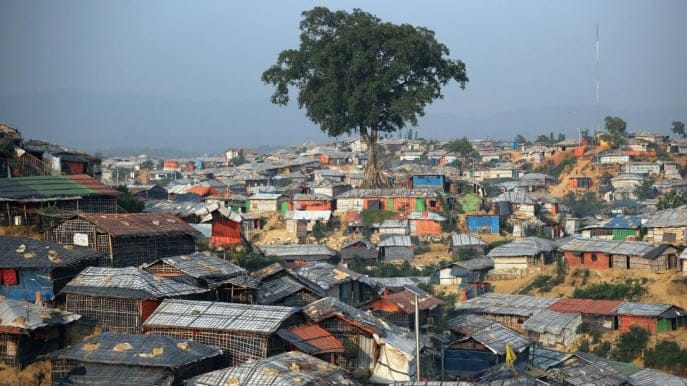
Reuters reporters traveled to U Shey Kya village on Thursday, passing nearby villages where dozens of houses were recently burned down, and interviewed three women who said they were raped by soldiers.
Five other women from U Shey Kya have also detailed in a series of telephone interviews how Myanmar soldiers raped them. The accounts are backed up by at least three male residents of the village and a Rohingya community leader in Maungdaw who has gathered reports about the incident.
The residents said some 150 soldiers arrived near U Shey Kya on Oct. 19.
Most male residents left the village as they believed they would be suspected as insurgents. The women said they stayed behind in the belief the military would burn down empty homes.
Soldiers dismantled the fences around homes, residents said, removing possible hiding places as part of what authorities called a “clearance operation.”
A 30-year-old woman described being knocked off her feet by soldiers and repeatedly raped.
“They told me, ‘We will kill you. We will not allow you to live in this country,'” she said.
The women said soldiers took gold, money and other property, and spoiled rice stores with sand.
“We can’t move to another village to find medical care,” said a 32-year-old survivor. “I don’t have clothes now or food to eat. It was all destroyed. I’m feeling ashamed and scared.”
Source : Reuters