
Arakan News Agency
On the night of Saturday, November 26, Mohammad Saleem, 29, a native of Arakan state of Myanmar living as a refugee in Jammu’s Narwal region, went to visit one of his relatives in nearby Jhuggi, leaving behind his wife and three kids.
At around 12 am, just when most of the refugees were going off to sleep, they saw sharp red flames started engulfing the makeshift homes one by one, starting from the one owned by Mohammad Saleem and leaving a trail of huge smoke in the air.
As the news reached Saleem, he came running towards his home, only to find the burnt bodies of his wife, three kids including one of his sisters. One of his sons who survived is currently in the state-owned hospital.
But it was only the next morning when the true scale of the damage was visible. More than 80 huts, primarily made of wood and polythene, had been reduced to ashes like they never existed, and the refugees had lost nearly all their possessions.
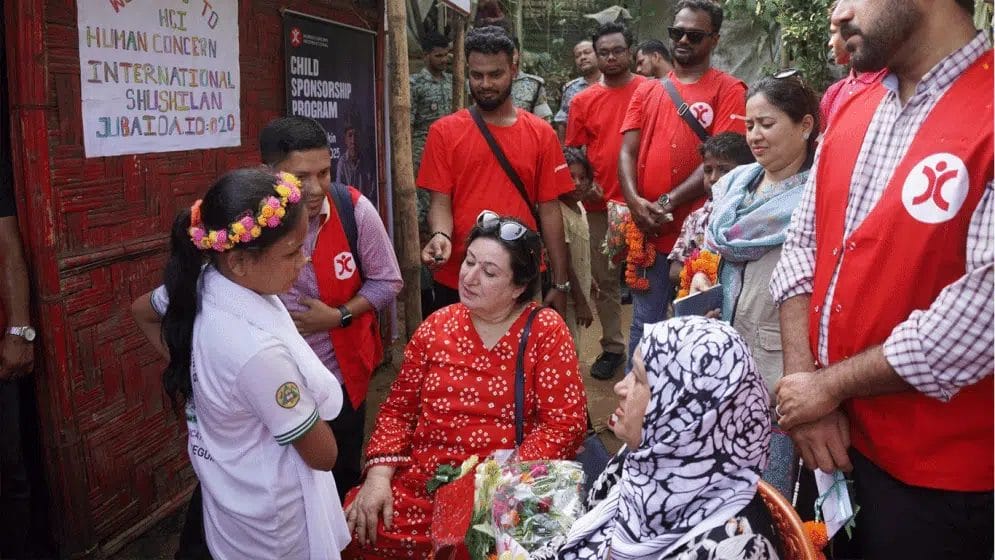
Mohammad Zubair, 22 who used to live with his family of six, was among the many who lost all his belongings and now lives in a temporary tent given by Red Cross.
“I lost my hut along with my grocery shop which I used to operate from the very same hut. I lost everything. The fire spread so fast that people didn’t had time to react. We could have either saved our lives or our belongings,” Zubair told media.
“Me and my family are putting up right now in a tent given for shelter by Red Cross, but it will be taken back in next few days because it was given to us until we can arrange our accommodations,” he adds.
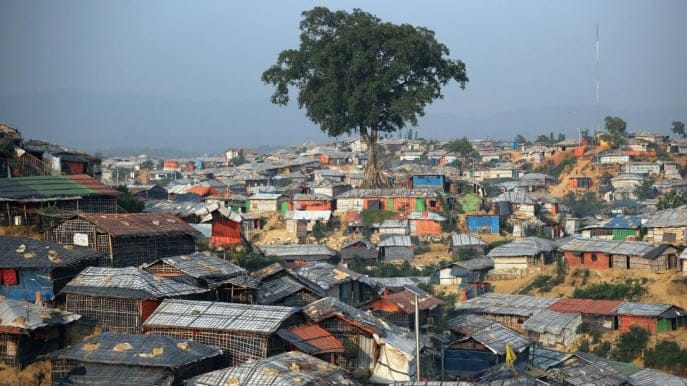
In Jammu district of J&K, there are around 1,219 Myanmar’s Rohingya families comprising 5,107 members living as refugee after escaping persecution back in their country. Spread across different areas in Jammu, the refugees live in dozens of slum dwellings. Locals rent their pieces of lands on which refugees construct their homes and live along with the fellow refugees.
Most of the slums inhabited by the refugee are in abysmal conditions without proper toilets, water facilities and proper electricity.
Three weeks after the fire, victims are anticipating some help for shelter, so that they don’t have to live under the open sky, when the winters have already set in the Himalayan region.
“The winters are harsh in Jammu. We are praying to Allah that it shouldn’t rain otherwise we will be caught bad,” adds one of the refugees.
The US based Indian Muslim Relief and Charities (IMRC) has also taken note of the suffering of the Rohingya fire victims and has decided to intervene by providing tents and other essentials so as they can fight the harsh winters as well as summers.