
Arakan News Agency
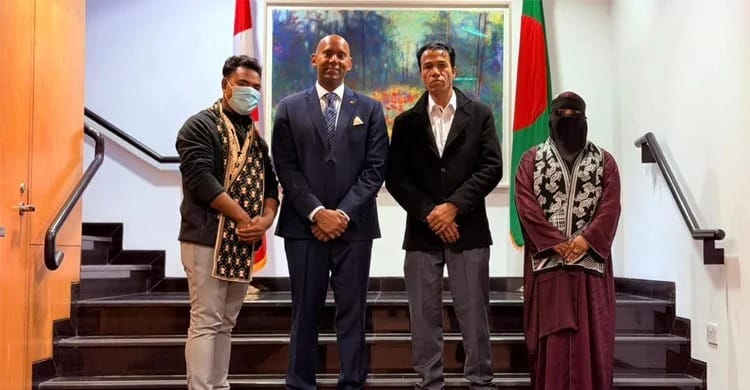
Canada’s High Commissioner to Bangladesh, Ajit Singh, has met with three representatives of the Rohingya community who are preparing to testify before the International Court of Justice (ICJ) in a case concerning allegations of genocide committed against the Rohingya in Myanmar.
In a statement issued on Monday, the Canadian High Commission said the meeting focused on the Rohingya community’s long-standing persecution and violence, as well as their continued struggle for rights and justice in Myanmar. The discussions also emphasized the importance of international accountability in addressing grave crimes.
According to the statement, the Rohingya representatives expressed their gratitude to Canada for its continued support and for helping ensure that the voices of victims are heard at the ICJ.
They stressed that giving testimony before the world’s highest court is a crucial step in their community’s pursuit of justice.
High Commissioner Ajit Singh praised the courage of the Rohingya witnesses, reaffirming Canada’s strong commitment to human rights, accountability, and international justice. He said Canada would continue to stand with the Rohingya people in their quest for dignity and justice.
Hearings in the case are scheduled to begin next Monday at the International Court of Justice in The Hague, Netherlands, and are expected to continue for three weeks.
Legal experts say that direct testimony from victims could play an important role in strengthening the case before the court.
The Rohingya case at the ICJ is widely regarded as one of the most significant international cases related to accountability for mass crimes, amid allegations that the Myanmar military (the ruling military council) committed serious violations, including killings and forced displacement, against the Rohingya in Arakan State since 2017.
Today, around 500,000 Rohingya remain inside Arakan State, while more than one million refugees have fled to Bangladesh, with hundreds of thousands living in other countries, as international calls continue for justice and for a safe and voluntary return of the displaced.


