
Arakan News Agency
Three local youth were assaulted on Sunday night in the Indian city of Jammu near Kiryani Tallab, an area inhabited by Rohingya refugees, prompting police to register a case and launch an investigation, according to local media reports.
Police said a First Information Report (FIR) numbered 13/2026 was registered at Bahu Fort Police Station under Sections 115(2) (voluntarily causing hurt), 126(2) (wrongful restraint), and 352 (intentional insult with intent to provoke breach of peace) of India’s new penal code.
According to the police, the incident occurred when three youths—Shan Goswami, Vinay, and Sushant Goswami—were travelling from the Bathindi area toward Qasim Nagar. They were allegedly mocked by unidentified individuals near Kiryani Tallab for wearing vermillion marks on their foreheads.
Police added that when the youths objected, a group of unidentified persons assaulted them with punches and kicks, leaving them injured.
The victims reportedly managed to escape from the scene and later received preliminary medical treatment at a healthcare facility.
Authorities said investigations are ongoing to identify those involved, and no arrests have been announced so far.
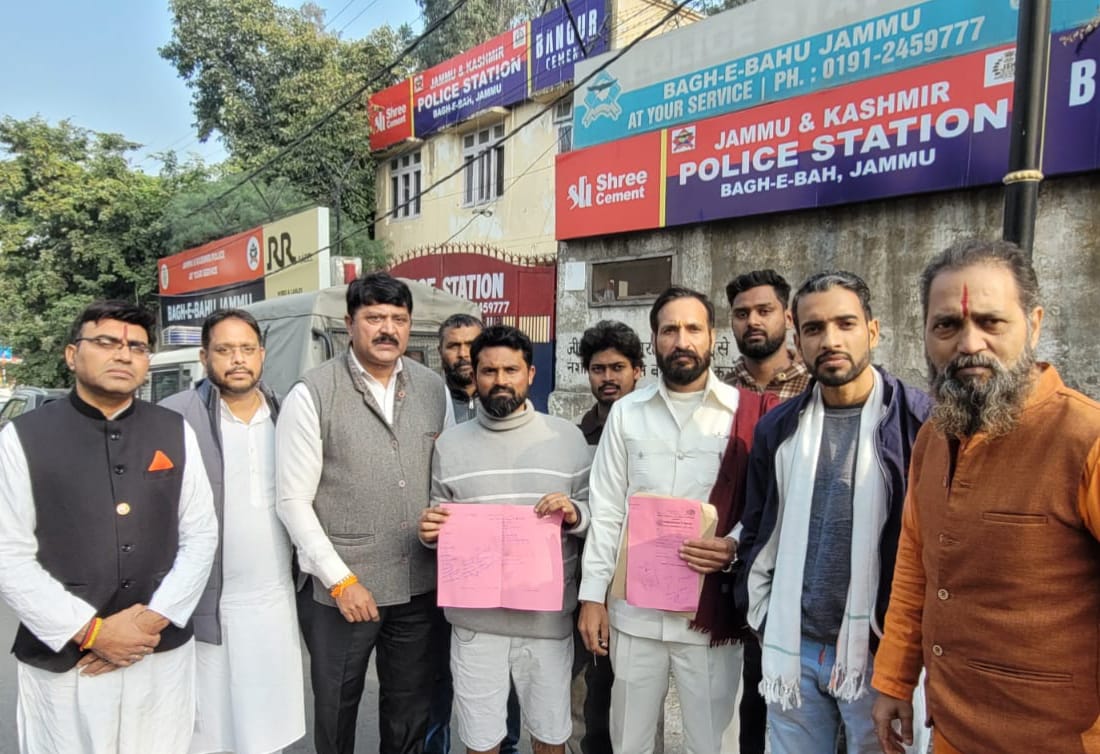
Following the incident, activists of the Shiv Sena (UBT) gathered in the area, chanting slogans and demanding strict action against the attackers.
Manish Sahni, the party’s chief in the Union Territory of Jammu and Kashmir, described the incident as “disturbing” and called for the immediate identification and prosecution of those responsible.
Later, the concerned Station House Officer arrived at the protest site and assured demonstrators that legal action had been initiated, after which the protest was called off.
Police have not yet issued any statement regarding the identity or background of the assailants, reiterating that the investigation remains underway.
The Rohingya community in India continues to face precarious legal and humanitarian conditions. Tens of thousands are estimated to be living across several Indian states, including Jammu and Kashmir, after fleeing persecution and violence in Myanmar.
India does not officially recognize the Rohingya as refugees, leaving many vulnerable to arrest, detention, and deportation, and limiting their access to legal protection and basic services.
In recent years, anti-Rohingya rhetoric, coupled with periodic communal tensions and security-related allegations, has further heightened their vulnerability and raised human rights concerns about their safety and future in the country.


