
Arakan News Agency
UNICEF warned in its Humanitarian Situation Report covering the period from January 1 to September 30, 2025, of a worsening humanitarian crisis in the overcrowded Rohingya camps in Bangladesh, where nearly 1.2 million refugees live, half of them children, amid rising risks of malnutrition, disease outbreaks, insecurity, and disruptions to education due to funding shortages.
It said that 604,728 Rohingya children are in need of assistance, while 1,162,939 Rohingya refugees require urgent support, according to the Office of the United Nations High Commissioner for Refugees (UNHCR).
UNICEF added that it managed to reach 563,033 people (44% of the 2025 Emergency Appeal target) through life-saving services, including the treatment of 907 children suffering from severe acute malnutrition, the vaccination of 87,898 infants, and the provision of water and sanitation services to around 561,000 refugees.
It explained that funding received up to September 2025 amounted to approximately USD 93.7 million, leaving a funding gap of USD 50.8 million, which threatens the continuity of vital services, particularly in the areas of education and water, sanitation and hygiene (WASH).
UNICEF noted that the security situation in the camps remains fragile, with border tensions and incidents inside the camps, in addition to natural or man-made disasters. A total of 2,567 incidents were recorded, affecting 23,187 households and 110,659 people, including 57,543 children. These crises resulted in 32 deaths, 210 injuries, and five missing persons, while 10,671 people experienced secondary displacement.
On Bhasan Char Island, 382 households and 1,311 people were affected by 227 incidents — including fires, drowning, windstorms, and lightning strikes — leaving 175 people injured and nine deaths, among them three children.
Public health emergencies continue to pose a major threat, with 7,960 confirmed cases and six deaths recorded in the Rohingya camps, representing a 34.8% decrease compared to the same period in 2024, partly due to targeted prevention measures.
Acute Watery Diarrhea (AWD) has also affected the camps, posing a serious threat to children’s health and increasing the need for urgent interventions in water and sanitation.
Children remain highly vulnerable both in the camps and in host communities, facing risks from waterborne disease outbreaks, malnutrition, weak health services, and disrupted education, alongside increased risks of child labor, forced recruitment by armed groups, and gender-based violence.
UNICEF stressed that sustained and urgent support remains essential to ensure the continuation of vital services for children, with a focus on education, water, health, and protection. It emphasized the need to strengthen partnerships with governments and donors to secure long-term funding that protects children’s rights and sustains humanitarian operations in Bangladesh.
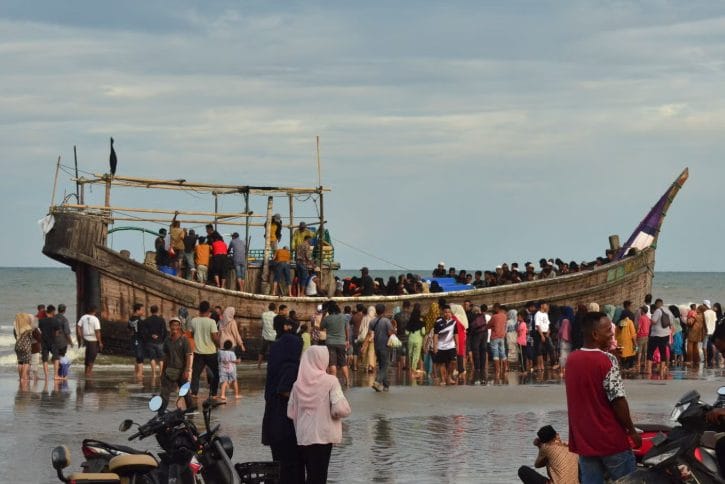
Bangladesh hosts more than one million Rohingya refugees in camps in the Cox’s Bazar area, which the United Nations classifies as the largest refugee camp in the world. Refugees have been living in dire humanitarian conditions since fleeing Myanmar in 2017 due to what has been described as a “genocidal” campaign carried out by Myanmar’s military against them. Their situation has further deteriorated following the renewed fighting between Myanmar’s military and the Buddhist Arakan militias (Arakan Army) in November 2023.