
Arakan News Agency
A recent study conducted by the International Centre for Diarrhoeal Disease Research, Bangladesh (icddr,b), has revealed significant gaps in vaccination coverage among forcibly displaced Rohingya children as well as children in the host community in Cox’s Bazar, with notably higher rates of zero-dose and under-immunized children within Rohingya camps.
The study found that 0.5% of Rohingya children had not received any dose of the pentavalent vaccine, compared to 0.2% among children in the host community. The proportion of under-immunized children those who missed the third dose was 12.5% among Rohingya children versus just 5.8% in the host communities. The dropout rate within the camps was also higher, at 18.3%, compared to 8.9% outside the camps.
The study was conducted from June 2024 to May 2025, covering all Rohingya camps in Ukhiya and Teknaf in Cox’s Bazar, as well as Bhasan Char in Noakhali and two nearby unions. The research was carried out in collaboration with Jhpiego and supported by the Ministry of Health and the Gavi Alliance.
The study suggested that child illness was the main reason for missed vaccinations, along with other challenges including restrictions from male family members, difficulties in communicating with caregivers, poor record-keeping, limited resources, a shortage of trained staff, and weak coordination among organizations operating in the camps.
Researchers recommended improving communication between health workers and caregivers, strengthening staff training, enhancing coordination between immunization teams and camp authorities, increasing community engagement, implementing a digital data system, and improving monitoring and supervision mechanisms.
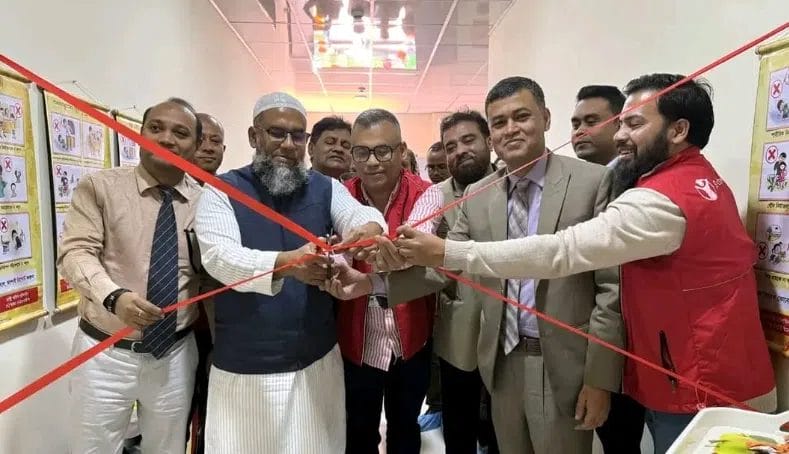
The study’s findings were presented at a seminar held at the Institute of Public Health, attended by officials from the Ministry of Health and the Expanded Programme on Immunization (EPI) in Bangladesh.
Bangladesh achieved full vaccination coverage of 81.6% for children under one year of age in 2023, a significant improvement from just 2% in 1985.
Bangladesh currently hosts around 1.3 million Rohingya refugees in the Cox’s Bazar camps, recognized by the United Nations as the largest refugee settlement in the world. The refugees have been living in difficult humanitarian conditions since fleeing Myanmar in 2017 due to a “genocide” campaign carried out by the Myanmar military. Additional waves of displacement occurred following renewed clashes in Arakan State in November 2023 between the Myanmar army and Buddhist Arakan militias (Arakan Army).