
Arakan News Agency
There are the usual pictures of homes, trucks, helicopters and stickmen – but the houses are on fire, the lorry is running over people, the helicopters are raining down death and the stickmen are killing with machine guns and machetes
Chart star Jessie Ware is close to tears as she stares at the rows of disturbingly violent images.
What makes the horror more chilling is that they were drawn by children.
There are the usual pictures of homes, trucks, helicopters and stickmen.
But the houses are on fire, the lorry is running over people, the helicopters are raining down death and the stickmen are killing with machine guns and machetes.
The ground is strewn with bloodied victims. One stickman hangs from a tree.
The pictures are not the works of active young imaginations – but records of what these children have seen.
They were drawn by Rohingya youngsters who had fled from Myanmar to a safe haven in Bangladesh after witnessing families being butchered and raped.
Many of the traumatised victims of atrocities had walked for days.
They arrived sick, exhausted and in desperate need of water, food and shelter.
Their pictures have been seared on the mind of singer Jessie, a Unicef ambassador whose Devotion album was a UK No5 in 2012.
She spoke exclusively to the Sunday People after touring Kutupalong, Moinerghona and Balukhali refugee camps in the Cox’s Bazar district of Bangladesh.
Jessie said: “The drawings were so upsetting. Those children have seen things that nobody should be forced to see. It’s been horrendous for them.
“At the camp there were youngsters walking about on their own, some just three or four, carrying tiny babies on their hips.”
Refugee settlements were home to at least 300,000 Rohingyas before the slaughter and ethnic cleansing of Myanmar’s Muslim minority started in August.
The migration has turned into a flood. Now more than 670,000 Rohingyas have fled state-led militia massacres.
A conflict started after a group of Muslims allegedly gang raped and murdered a Buddhist woman.
The UN High Commissioner for Human Rights has called it a “textbook example of ethnic cleansing”.
Jessie was visibly moved as she recalled their harrowing conversation. She said: “Minara lost a sister and brother in the chaos and is convinced they are dead.
“Since she arrived at the camp she’s been reunited with a cousin, Amina, but nothing can take away the pain of losing her closest family. She told me how militia men tried to rape her before she was able to get away from them and run.”
Jessie welled up and asked: “Can you imagine seeing your parents die, then mutliple men trying to rape you?”
For Minara, the child centre is the one place where she can be herself again.
She said: “I feel happy when I go there. There are toys and I like drawing. It helps me forget my bad situation and pain.”
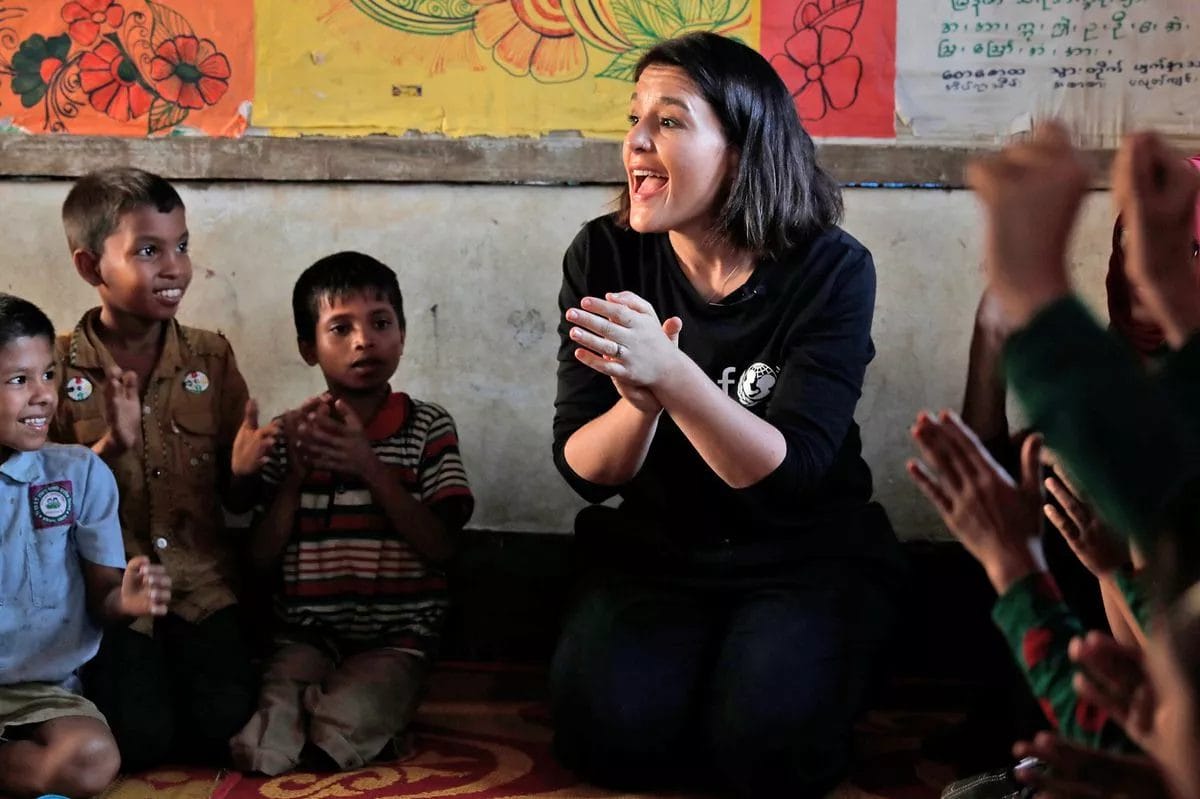
At the centre Jessie met kids aged between seven and ten. The youngsters poignantly sang We Shall Overcome. There were smiles as she encouraged them to join in with her rendition of If You’re Happy and You Know It.


