Arakan News Agency
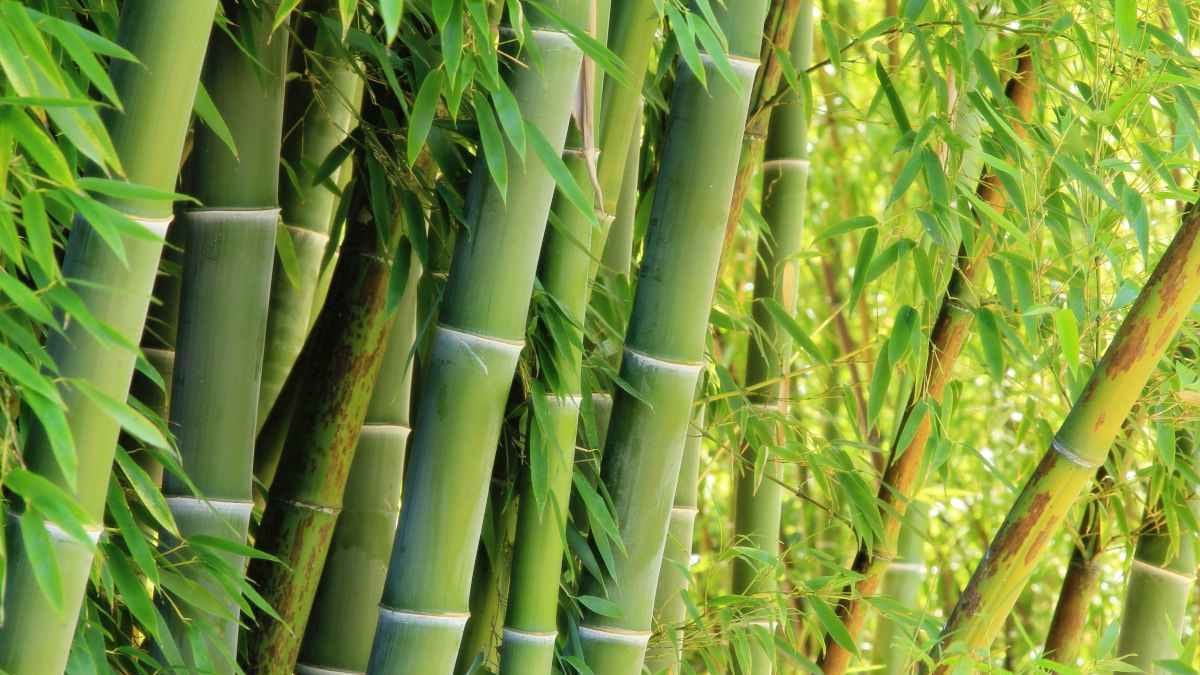
Environmental experts in Bangladesh have warned that the intensive use of bamboo in Rohingya refugee camps, particularly in Cox’s Bazar, is accelerating the decline of the country’s bamboo forests. The camps require approximately 20 million bamboo poles each year, amid the disappearance of more than 80% of these forests over the past 15 years.
According to TBS News, this sharp decline is attributed to several factors, including population growth, expanding settlements, and deforestation. However, the major turning point came in 2017, when over one million Rohingya refugees fled Myanmar and entered Bangladesh, prompting aid agencies to rely almost entirely on bamboo for constructing shelters and essential infrastructure within the camps.
Professor Md Akhtar Hossain of the Institute of Forestry and Environmental Sciences at the University of Chittagong stated that nearly all construction of homes, roads, bridges, and health and service facilities in the Rohingya camps depends on bamboo. He noted that bamboo resources in the Chittagong–Cox’s Bazar region have been completely depleted and now need to be sourced from distant northern areas to meet demand.
Official data highlights the severity of the crisis. A 2005 FAO study estimated Bangladesh’s bamboo forests at approximately 830,000 hectares. This dropped to 500,000 hectares in 2016–2017 and fell further to just 145,619 hectares, according to the latest forest inventory in 2023.
In Cox’s Bazar, home to around 1.1 million refugees across roughly 600 acres, large areas of bamboo groves and other vegetation were cleared during camp construction. Bamboo continues to be extracted from northern and hilly regions to maintain the stability of shelters in the camps.
Suppliers indicated that two types of bamboo—Barak and Muli—are most commonly used in the camps. Barak bamboo is preferred for structural work due to its strength and straightness, while Muli bamboo is primarily used for roofing.
High demand during the early years of camp construction led to intensive forest extraction, as building a single two-room shelter requires 10–12 Barak bamboo poles.
The lack of bamboo treatment facilities exacerbates the crisis. Only about 5% of the poles used annually in the camps are properly treated, reducing their lifespan and driving continuous extraction from forests.
Experts warn that this waste, combined with weak investments in sustainable cultivation and processing, threatens the collapse of bamboo-related ecosystems.
Researchers emphasize that bamboo is not just a building material but a vital environmental and economic resource, contributing to carbon absorption and supporting the livelihoods of millions. They caution that if current trends continue, Bangladesh could permanently lose its bamboo forests, with severe long-term environmental and economic consequences.
The Rohingya face harsh humanitarian conditions in the camps, relying on unsafe, highly flammable building materials that contribute to frequent fires. Incidents include a fire at Camp 7 in the Kutupalong area, controlled without injuries, a fire at Camp 4 in April, and a massive fire at Camp 22 days earlier that destroyed nine Rohingya-run shops. Camp 9 also experienced a fire in February caused by a solar battery explosion, partially destroying two shelters. In January, fires in Camp 18 and Camp 26 destroyed multiple shelters, claiming the life of a child and fully burning over 50 shelters.
Bangladesh hosts over one million Rohingya refugees in Cox’s Bazar camps, recognized by the United Nations as the largest refugee settlement in the world. Refugees have lived under difficult humanitarian conditions since fleeing Myanmar in 2017 due to a “genocide” campaign by the Myanmar military. New waves of displacement to Bangladesh have continued since fighting erupted in Arakan State between the Myanmar army and the Arakan (separatist) army in November 2023.