Arakan News Agency | Special
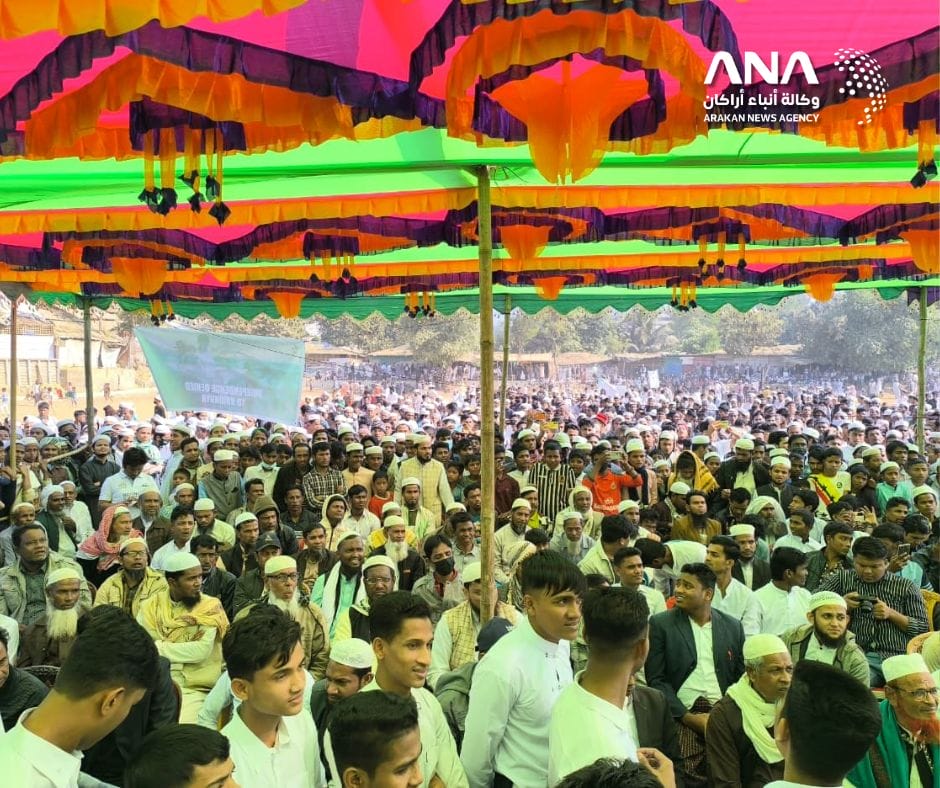
Rohingya refugees on Saturday marked Myanmar’s Independence Day with a peaceful gathering at Camp 2W in Bangladesh, stressing that the occasion holds no meaning of celebration for them, but instead represents decades of exclusion, discrimination, and systematic denial of their fundamental rights.
The Arakan News Agency correspondent said the event was held under the theme “Denial of Independence to the Rohingya,” with the participation of camp elders, youth, and activists, following a call by the Union of Rohingya Communities (UCR).
The event aimed to highlight the suffering of the Rohingya community and to stress that genuine independence cannot be achieved while an entire group is excluded from citizenship and legal identity.

The correspondent added that participants emphasized they are not opposed to Myanmar’s independence, but reject an independence based on discrimination and exclusion, underscoring that true freedom can only be realized through equality and the recognition of rights and dignity for all ethnic and religious communities in the country.
Speakers at the gathering noted that since Myanmar’s independence in 1948, the Rohingya have faced systematic policies aimed at stripping them of their rights, including denial of citizenship, severe restrictions on freedom of movement, and limited access to education, healthcare, and livelihoods.
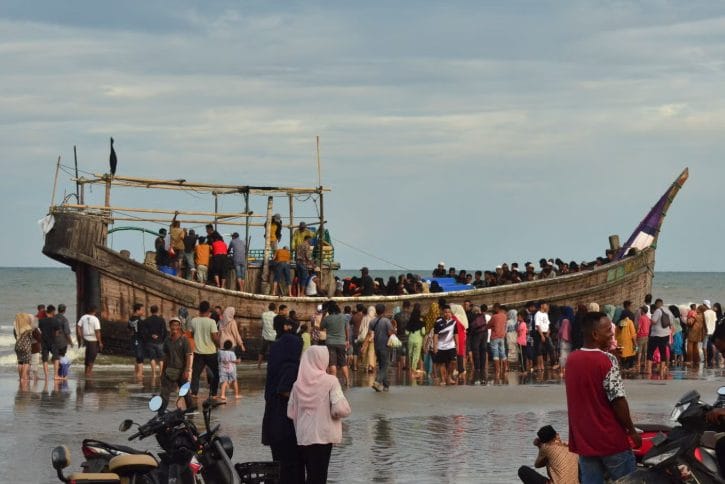
These policies later escalated into widespread violence and forced displacement, driving more than one million Rohingya to flee the country, most of them seeking refuge in Bangladesh.
The participants called on the international community to uphold its moral and legal responsibilities toward the Rohingya issue, urging concrete action to ensure justice, guarantee safe and voluntary return, grant full citizenship, and uphold human rights as essential foundations for lasting peace in Myanmar.
The event concluded with a message that Myanmar’s Independence Day will continue to be a day of grief and mourning for the Rohingya people unless their rights are restored, they are recognized as rightful citizens, and discriminatory policies targeting them are brought to an end.
More than one million Rohingya refugees currently live in overcrowded camps in southeastern Bangladesh after fleeing waves of violence and persecution in Myanmar, particularly since 2017.
The refugees continue to face dire humanitarian conditions due to restrictions on movement, work, and education, and remain almost entirely dependent on humanitarian aid, amid the absence of durable solutions that ensure their safe and voluntary return with full recognition of their rights and citizenship.