
Arakan News Agency
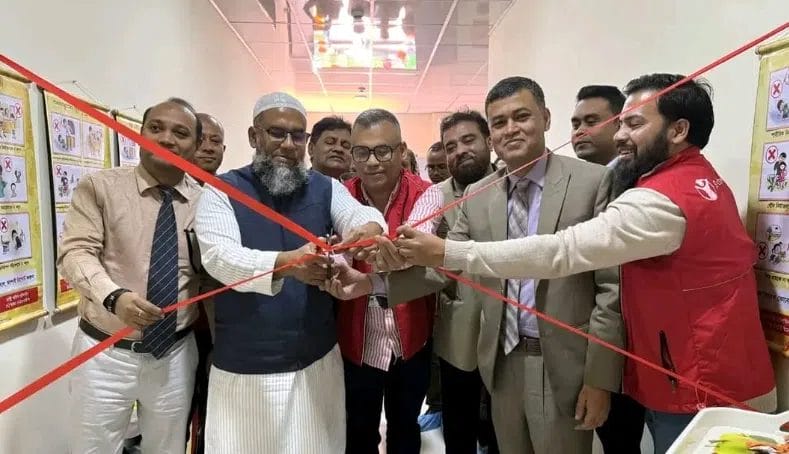
The United Nations Development Programme (UNDP) announced that Japan has contributed an additional $1.48 million to enhance sustainable waste management systems for Rohingya refugees and host communities in Ukhiya’s Camp 20 Extension, Cox’s Bazar, Bangladesh.
The announcement came during a ceremony held on December 7, attended by Japan’s Deputy Chief of Mission in Bangladesh, Takahashi Naoki, and UNDP Bangladesh Resident Representative, Stefan Liller. The new funding adds to Japan’s previous support of $240 million for the Rohingya humanitarian response following the mass influx in August 2017.
According to UNDP, the funding will be used to expand medical waste disposal facilities, improve waste-sorting systems, increase composting units, pilot waste-to-energy initiatives, and implement joint sanitation and waste management awareness programs for local communities. Field assessments indicate that the Rohingya camps generate approximately 140 tons of waste daily, posing serious environmental and public health risks without an effective management system.
Stefan Liller said the contribution will help establish a clean, healthy, and sustainable waste management system benefiting more than 900,000 Rohingya refugees and local host communities. Takahashi Naoki emphasized that the system will improve the quality of life for refugees while protecting the surrounding environment.
The new system is expected to improve sanitation across all 26 camps in Cox’s Bazar and operate effectively for the next seven to eight years.
Since 2017, Japan and UNDP have provided more than $240 million in support of health, environmental protection, and local development initiatives for over 900,000 people in Cox’s Bazar.
The Rohingya refugee camps in Cox’s Bazar continue to face severe challenges, hosting more than one million refugees who fled military operations in Myanmar’s Rakhine State in 2017. The large-scale influx has made waste management one of the most pressing environmental and health concerns in the camps.
Accumulated waste threatens both public health and the local environment, prompting international organizations to warn of long-term risks if sustainable solutions are not implemented.
Japan’s latest contribution is part of ongoing international support to maintain essential services in the camps amid declining global funding for the Rohingya crisis. In recent months, Japan provided $3.4 million to the UN World Food Programme in October, $3.5 million to the International Organization for Migration in April, and additional funds for health and living conditions support in Cox’s Bazar and Bhasan Char Island.
Bangladesh hosts the world’s largest refugee population in Cox’s Bazar, where Rohingya refugees continue to live under extremely difficult conditions following the 2017 genocide campaign by Myanmar’s military and renewed violence between the Myanmar army and Arakan Army in November 2023.