Arakan News Agency
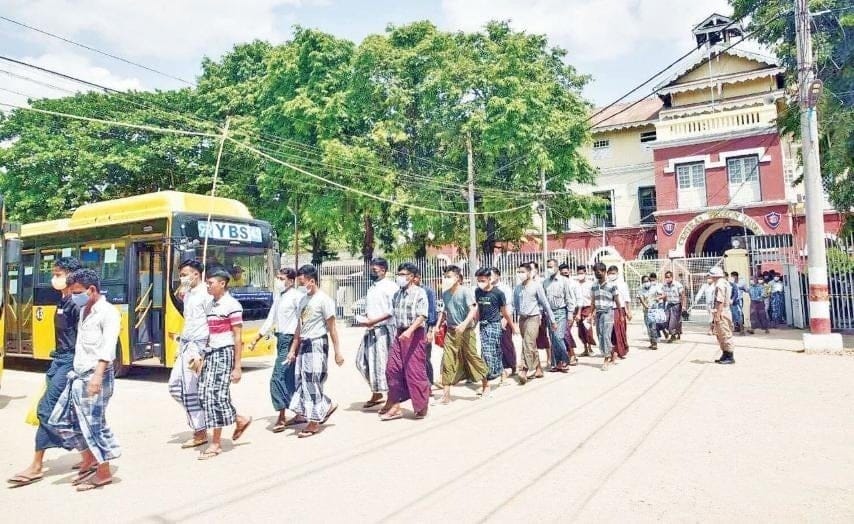
Myanmar’s military junta announced on Saturday morning, 4 January, an amnesty marking the country’s 78th Independence Day, granting the release of 6,134 male and female prisoners from prisons, detention centers, and camps across the country.
In an official statement, the Military Commission said the amnesty also included 52 foreign prisoners, whose remaining sentences were commuted and who are scheduled for immediate deportation from Myanmar.
The statement clarified that the pardons are conditional, meaning that any released individual who commits a new offense will be legally required to serve the remainder of their original sentence in addition to any new penalty, according to Mizzima.
The commission also announced a one-sixth reduction of sentences for prisoners convicted of other offenses, excluding those serving sentences for murder, rape, or violations of the Explosive Substances Act, Unlawful Associations Act, Arms Act, Narcotics Act, Natural Disaster Management Law, Counter-Terrorism Law, as well as corruption-related cases.
Since the 2021 military coup, rights groups have reported that the proportion of political prisoners included in official amnesties has remained limited. The statement did not specify how many detainees held for political reasons were included in the latest round of releases.
According to the Assistance Association for Political Prisoners (AAPP), a total of 30,216 people had been arrested for political reasons since the coup as of 30 December 2025, with more than 22,000 still remaining in detention.
Myanmar, particularly Arakan State, has witnessed a marked increase in arbitrary arrests since the 2021 coup. These arrests frequently target civilians, including members of the Rohingya community, through night-time raids and detentions carried out without warrants or clear charges, while families are often denied information about detainees’ whereabouts or reasons for arrest.
Media reports indicate that detainees are commonly transferred to military detention centers or local prisons, where many are held incommunicado for extended periods, amid recurring allegations of mistreatment during interrogations and shortages of food and medical care.
Despite periodic amnesty announcements by the military junta on national occasions, such measures rarely include those detained on political or security-related grounds, deepening public concern and sustaining an atmosphere of fear and mistrust, particularly in conflict-affected areas such as Arakan.