
Arakan News Agency
The media reported the existence of five previously undisclosed mass graves in the village of Guda Pyin in Myanmar through the accounts of dozens of survivors in refugee camps in Bangladesh and video clips filmed with mobile phones.
The Government of Myanmar claims that such cemeteries do not exist at all, and only one cemetery containing the bodies of 10 “terrorists” was reported in the village of Inn Din.
But the media quoted military scenes slaughtering civilians, and believed there were more mass graves.
This is the latest evidence of what appeared to be ethnic cleansing in western Arakan, Myanmar, against Rohingya, a Muslim ethnic minority in a predominantly Buddhist country.
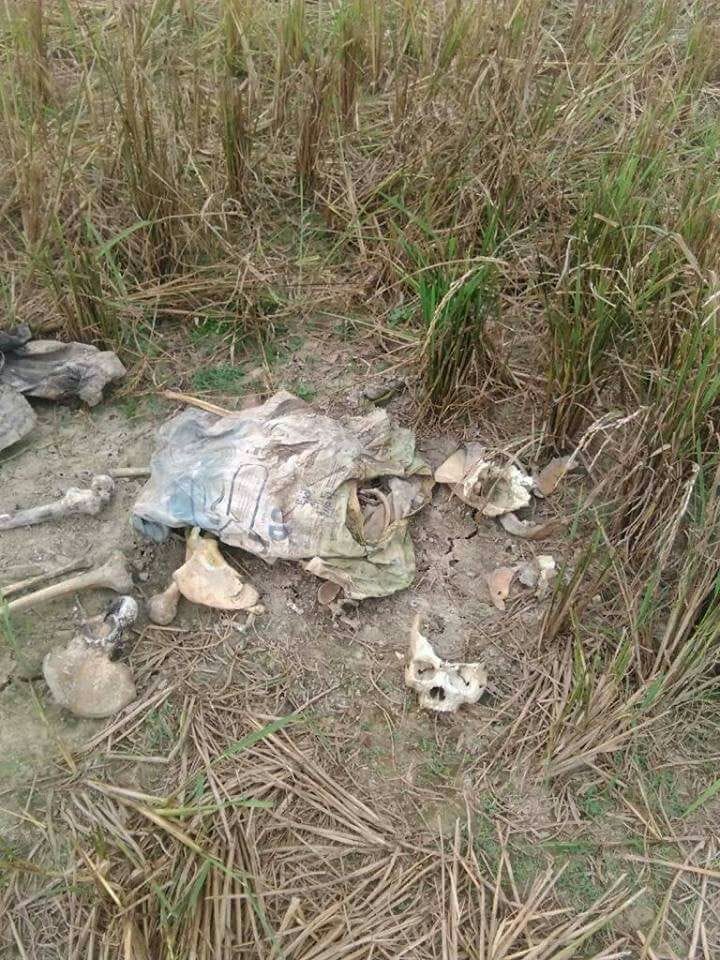
The faces are half buried in mass graves and burned with explosives. They were found days later from the accounts of some people that the army attacked the village of Guda Pyin on 27th August.
Survivors said that the soldiers carefully planned the attack and deliberately tried to hide what they had done.
The soldiers committed the slaughter with weapons, knives, shells, bombs and shovels to dismember the bodies and burn them to ashes so they are not identified.
Witnesses said they saw the soldiers buying 12 tanks of acid in the nearby market.
The images shows the remains shifted in coloring to blue-greenish as a result of the use of acid.
The Buddhist villagers then moved to the village of Guda Pyin in a purge process, allegedly using knives to cut off the wounded, according to the survivors. They said Buddhists and soldiers threw young children and the elderly into the fire.
Local community leaders have compiled a list of 75 dead so far, and villagers estimate the death toll could be as high as 400, according to testimonies from relatives and bodies they saw in graves scattered around the area.
Villagers saw that there were three large mass graves at the entrance to Guda Pyin between the north, near the main road, where eyewitnesses say the soldiers killed most of the Rohingya there.
Witnesses confirmed the existence of two large mass graves near a cemetery on the hills, not far from a school where there were more than 100 troops stationed.
Villagers also saw smaller graves scattered around the village.


