Arakan News Agency
Residents in northern Maungdaw have reported that Rohingya teachers, religious leaders and village administrators were pressured to express full support for the Arakan militias (Buddhist separatist groups) during a meeting held on November 29.
According to participants, the gathering took place in front of a local rescue camp and brought together around 250 people from several villages, including Shwezar, Nwar Yone Taung, Baka Gone Nar, Ponezar, Hla Bawzar, Pyin Phyu, Kyauk Hle Karr, Mingalar Gyi, Kyet Yoe Pyin, Thayak Oak, Thu U Lar, Dharkyi Sa and Ngan Chaung.
Residents said each village sent approximately twenty representatives—mainly teachers and religious figures. They reported that the atmosphere became tense when an Arakan militia township officer demanded that attendees “support the militia in all its decisions,” warning them against cooperating with any Muslim armed groups and instructing villagers to immediately report any unfamiliar individuals entering their communities.
Several attendees said they did not feel able to speak freely during the meeting. One teacher noted that the officer explicitly stated “their safety and ability to remain in Arakan State depend on following the militia’s instructions.”
Residents view the meeting as part of a wider pattern of mounting pressure on Rohingya communities living in areas under the influence of armed groups, where daily movements and basic decisions are closely monitored, and where directives affecting their security are increasingly imposed.
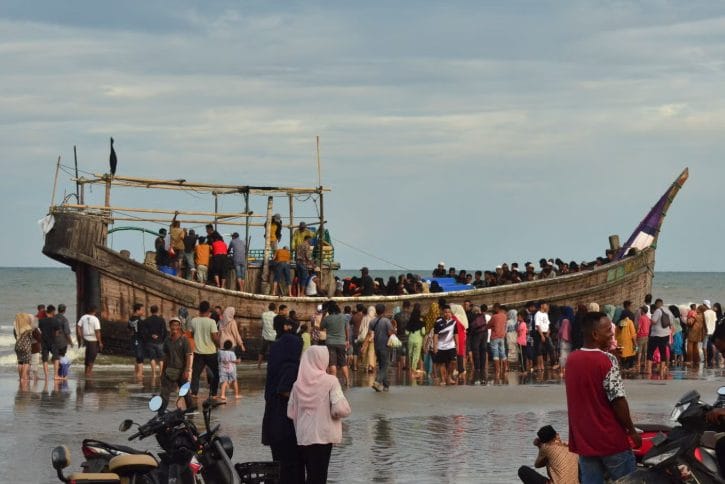
Arakan State has witnessed escalating tensions since renewed clashes erupted between the Myanmar military and Arakan militias in late 2023, triggering new waves of displacement among the Rohingya and tightening restrictions on villages located in militarized zones.
Amid the ongoing conflict, Rohingya communities face mounting pressure from multiple sides, including restrictions on movement, forced recruitment, and demands to cooperate with whichever armed faction controls the area.
In recent months, international human rights groups have documented a rise in abuses against Rohingya in rural Maungdaw and Buthidaung, including limits on humanitarian access, obstruction of food supplies, and concerns that the volatile political and military situation is being used to impose loyalty on the population.
The current pressures come at a time of severe security vacuum in Arakan State, where Rohingya civilians face dual threats from the Myanmar military and armed groups, with no formal protection mechanisms in place to ensure their safety.