Arakan News Agency | Exclusive
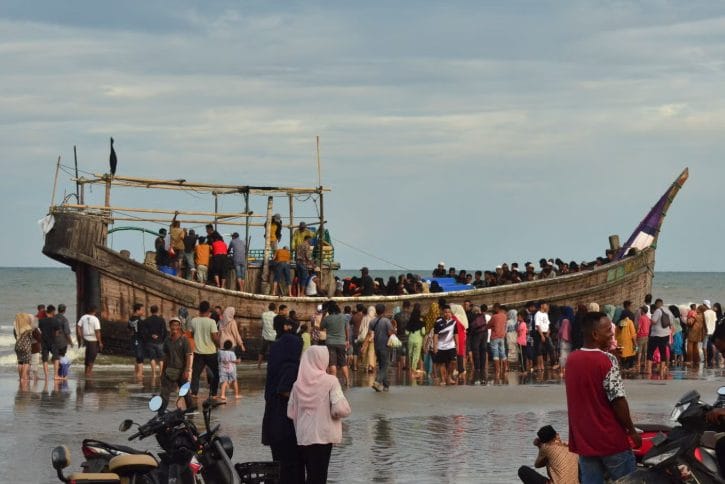
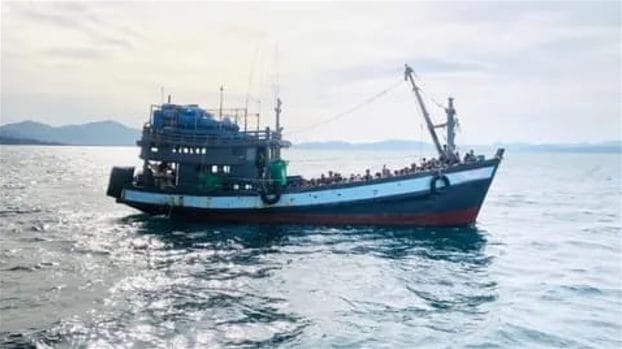
The Myanmar military detained 513 Rohingya, including a significant number of women and children, in Sittwe, Arakan State, after the Myanmar Navy intercepted their boat bound for Malaysia and opened fire on it several weeks ago.
Local sources told the Arakan News Agency that the boat was intercepted near Pauktaw Township, after which all passengers were forcibly taken into custody and transported to Sittwe. They were then distributed across multiple detention sites in the city, including the Sittwe Central Police Station, Police Unit No. 36 inside the University of Sittwe compound, and the Sittwe Prison complex.
Sources indicated that 70 people are held at the central police station, 208 people—including women and children—are held at the police unit inside the university, and approximately 250 people are held inside the prison compound.
Reports highlighted that many of the detained children are originally from Buthidaung and Maungdaw, while six had previously lived in refugee camps in Bangladesh. Children aged between 7 and 14 told local contacts that their parents sent them via traffickers in hopes of reuniting with relatives in Malaysia.
The group reportedly left their villages on November 7, stayed for a week in Samila Village in Rathedaung Township, and then moved to Ponnagyun Township, where they boarded the boat four days before it was intercepted.
This incident comes amid ongoing attempts by Rohingya to flee by sea to escape persecution and dire humanitarian conditions, with human rights observers warning that the lack of safe migration routes and international protection leaves them especially women and children vulnerable to violence, trafficking, and deadly maritime journeys.
Several weeks ago, families of fleeing Rohingya in boats from Sittwe, western Arakan, were shot at by the Myanmar Navy, resulting in deaths and injuries.
Local residents have previously reported cases of collective and individual suicides in Sittwe, due to the strict siege on the city, rising prices, and lack of employment opportunities, which worsened the food crisis and led some families to die of starvation.
The number of displaced Rohingya in Sittwe is estimated at 110,000, living across 16 camps, all suffering from severe food shortages while aid deliveries have been insufficient, leaving vulnerable communities without support.