Arakan News Agency
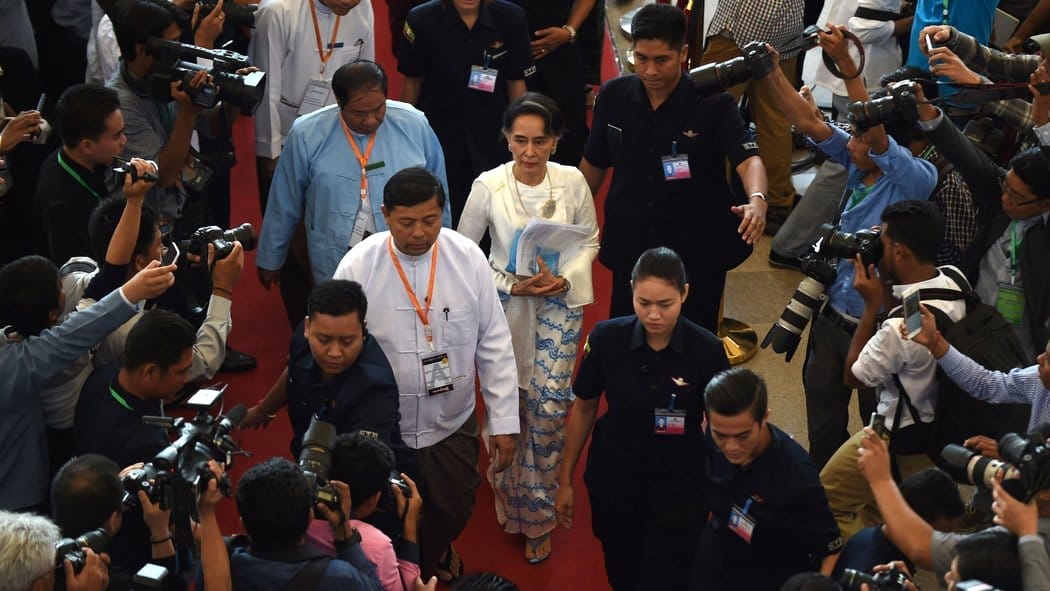
The four-day historical Panglong Conference gathered representatives of the government, parliament, military, invited political parties, ethnic armed and non-armed organisations and civil society. Suu Kyi hopes the peace talks will pave the way towards a federal system for Myanmar. Reform measures introduced by the Myanmar government since 2011 have indeed provided powerful boost to national economy and according to the World Bank and the International Monetary Fund, the Southeast Asian country is poised to become the world’s fastest growing economy this year and remain in the high-flying club for the next few years. As reported by Al Jazeera, Suu Kyi, UN chief Ban Ki-moon and General Min Aung Hlaing, the head of Myanmar’s armed forces, are scheduled to give speeches at the opening of the talks to determine the fate of the country’s various ethnic minorities, who make up about 40% of the population. Hopefully, Asian countries can stop being suspicious of each other and seize the opportunity to promote regional peace, stability and development.
Secretary-General of the United Nations, Ban Ki-moon (R) greets the audience upon arrival with his wife Ban Soon-taek (2nd R) and Ho Kwon Ping (2nd L) Chairman of Singapore Management University at the Ho Rih Hwa Leadership in Asia Public Lecture Series in Singapore on August 29, 2016. “It’s now clear that there can be no military solution to your differences”. Reassuring India’s support to Myanmar, Modi said India wants to take the relationship to “new heights”, adding “A bright future for Myanmar is not just your objective”. The government, along with many Burmese, consider the Rohingya to be illegal Bangladeshi migrants. On July 1, Yanghee Lee, the United Nations special rapporteur on Myanmar, said Myanmar’s government should immediately end the deep discrimination practiced against the Rohingya and other Muslims in Rakhine. Thousands have fled persecution and poverty. The countries also made a decision to continue the “policy of not allowing any insurgent groups to use their soil for hostile activities against the other side”. “The government has assured me about its commitment to address the roots of the problem”, Ban told a news conference in the capital Naypyitaw”. “It’s been like this since we have been fighting”.
Many Rohingya families have lived in Myanmar for that long. Bringing peace could rejuvenate economies in the war-ravaged regions, and open up investment to foreign powers who are keen to scoop up its vast resources. Three groups – the Arakan Army, Ta’ang National Liberation Army and the Myanmar National Democratic Alliance Army – have refused to commit to disarming and their involvement remained uncertain on Tuesday. The reference was to negotiations with the people of the Kachin, Chin and Shan states that Suu Kyi was to hold this week. President U Htin Kyaw seen with Indian Prime Minister Narendra Modi during his visit to India, Aug. 27-30.
The previous military-backed government brokered individual truces with various insurgent groups and oversaw a ceasefire covering eight minor insurgencies past year that fell short of a nationwide deal. They warned the move threatened to scupper progress at the peace talks. In the past few days, India and China have both talked of playing a role in Myanmar’s peace process. The symbolism of this Conference is clear from its title, which recalls the spirit of the original Panglong Conference convened in 1947 by General Aung San, the Father of Modern Burma.