Arakan News Agency
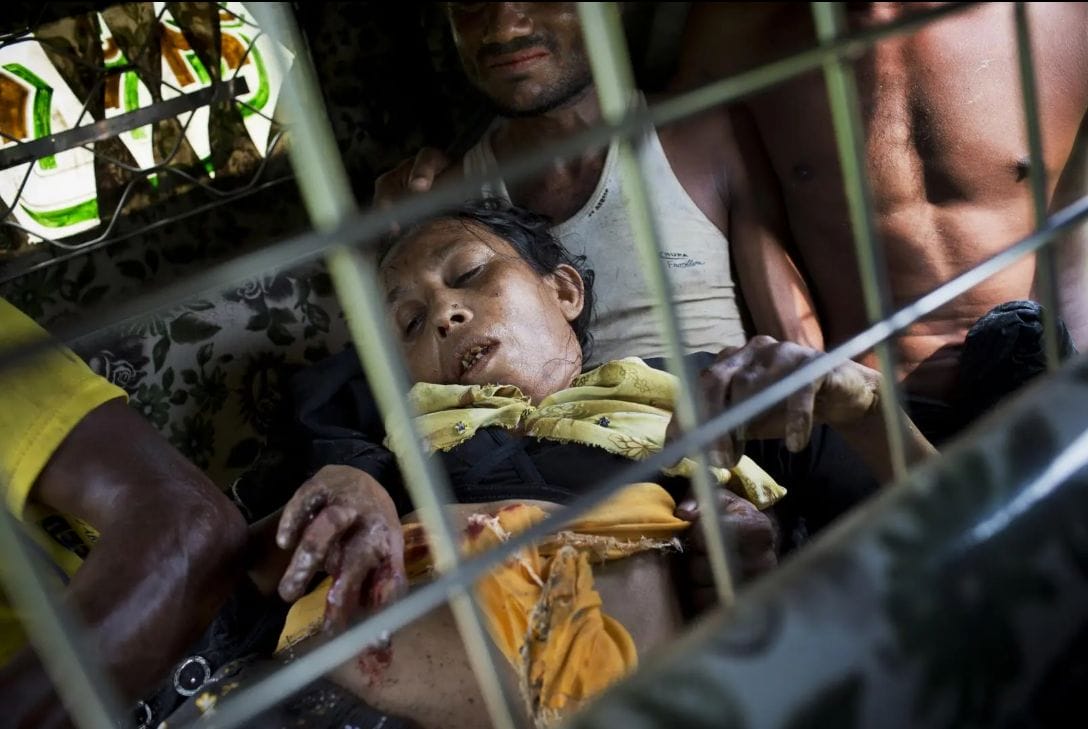
One in three women interviewed by media this week in Bangladesh’s refugee camps for Rohingya Muslims who fled violence in Myanmar claimed they were raped by security forces before their escape.
A correspondent for BenarNews, who spent four days visiting the camps in southeastern Cox’s Bazar district, reported that 17 of the 54 Rohingya women she interviewed said they were raped while Myanmar’s military launched a brutal crackdown in northern Arakan state after nine police officers were attacked and killed by an armed Rohingya insurgent group in October.
Numerous reports of rape and other atrocities had emerged since the post-attack crackdown, which led to some 65,000 Rohingya entering Bangladesh, but this is the first time that numbers were cited based on random surveys of the extent of sexual assaults on women.
Refugees who spoke to BenarNews also described a wide range of other abuses, including torching of their homes and animals, beatings, and killings of loved ones.
The perpetrators, often operating at night, were members of the military or the Natala, a uniformed paramilitary force, they said.
Setara Begum, 24, a refugee in Kutupalong camp, said security forces snatched her one night as she was eating dinner in Ngar Sar Kyer village, in Maungdaw district, and took her to some nearby hills where she and some other local women were “tortured by turns.”
“Failing to bear the barbaric torture, two women died there. I somehow managed to flee after being raped,” she told BenarNews.
“They stripped me, beat my breasts and body; then they did whatever they desired,” she said.
Her husband rescued her hours later. By that time, the security forces had burned their home, according to Begum. They hid in the hills for several days.
“I could not eat rice for 10 days; my three children survived eating leaves. Coming to Bangladesh, they can eat here,” said Begum, who crossed the border on Jan. 13.
Source : BenarNews