
Arakan News Agency | Exclusive
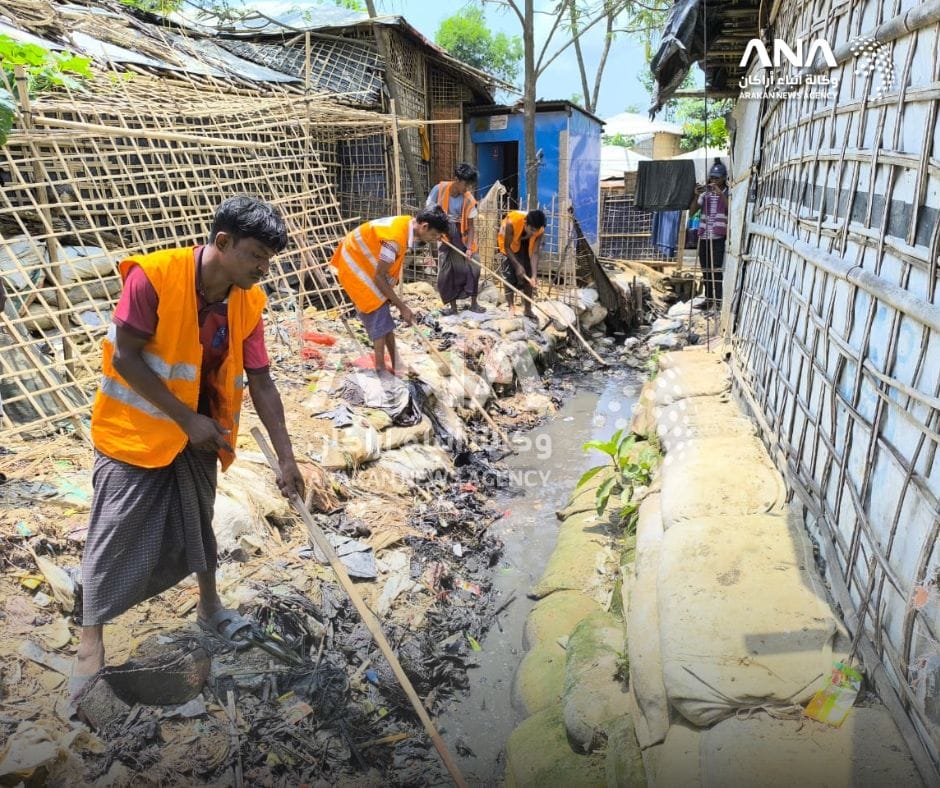
The Rohingya community has stressed the importance of protecting the environment and climate in refugee camps in Cox’s Bazar, Bangladesh, due to their vital role in preserving the health and safety of millions of refugees.
The community noted that women, children, and the elderly in the camps face increasing challenges as a result of climate change, including extreme heat, heavy rainfall, and floods that destroy shelters and contaminate water sources leading to outbreaks of diseases such as cholera, dengue fever, typhoid, and respiratory infections.
The Rohingya called on the international community, the United Nations, and non-governmental organizations to intensify efforts to improve environmental conditions and expand climate volunteer programs in the camps, while empowering refugees themselves to take part in climate protection activities such as tree planting, hygiene awareness, waste management, and disaster response.
The community affirmed that protecting the climate is not merely about preserving nature it is about saving lives. Climate justice, they emphasized, is human justice, as protecting the environment means protecting the lives and future of the Rohingya people.
Bangladesh currently hosts around 1.3 million Rohingya refugees in the Cox’s Bazar camps, which the United Nations classifies as the largest refugee settlement in the world. Refugees there live under harsh humanitarian conditions since fleeing Myanmar in 2017 following the “genocidal campaign” launched by the Myanmar military against them. Renewed waves of displacement have continued since fighting broke out in Rakhine State between the Myanmar army and the Buddhist Arakan militias (the Arakan Army) in November 2023.


