Arakan News Agency
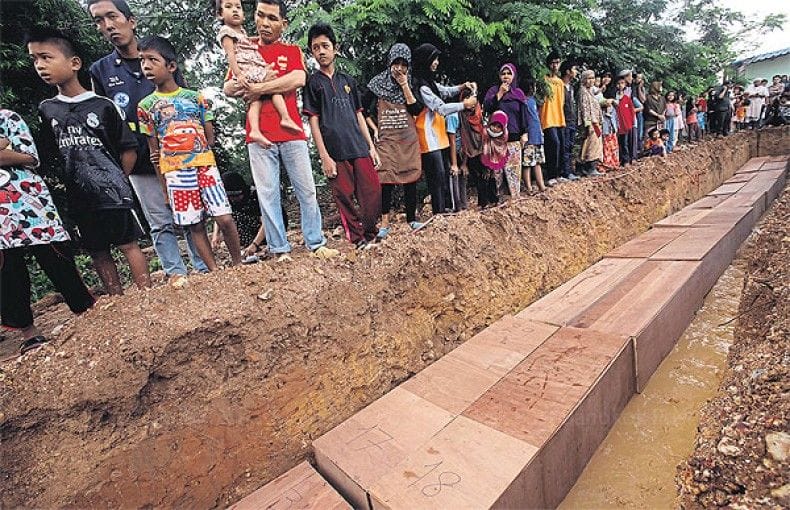
The discovery of detention camps and mass graves of the Rohingya in Padang Besar has shocked the public. The testimonies of the survivors have revealed the suffering that human trafficking victims have long endured.
The arrivals of Rohingya to Thailand is not a new phenomenon. There are more than 100,000 Rohingya living in refugee camps in Sittwe, the southern capital of Arakan State in Myanmar. With no hope for integration into the local Arakan community and economic opportunities, many choose to leave Arakan for a future free of persecution.
Myanmar’s most recent population census revealed that the number of uncounted Rakhine State residents may reach as many as one million people, which accounts for one-third of the total population in the western coastal state. This reflects the fact that minorities, including Rohingya, were not included in the state census.
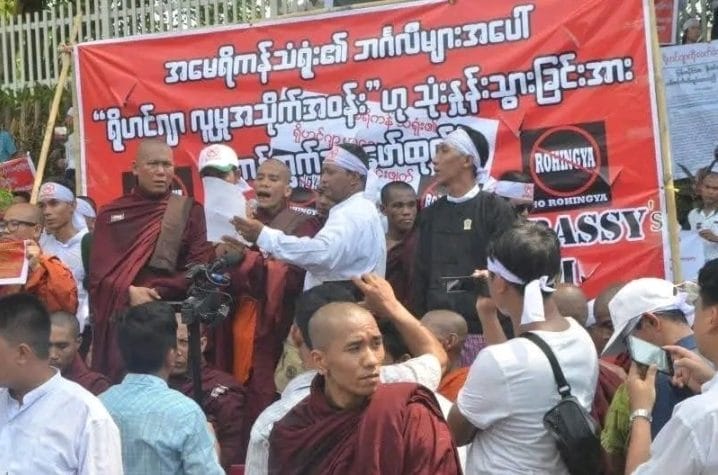
Such sectarianism has driven the exodus. In the past, earlier batches of boat people were mainly men aged 20-35. Maxime Boutry’s 2014 article “The Arakanisation of Arakan: The roots of a New Exodus” describes how the profile of the boat people has changed since 2012.
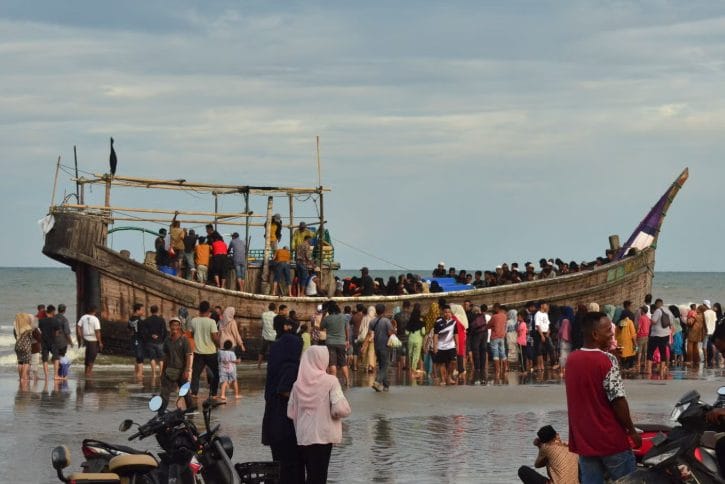
Violent clashes between the local Arakanese and the Rohingya – and sectarian oppression – gave rise to new waves of asylum seekers, comprising women and newborn babies seeking to settle and work in Malaysia. People are willing to pay up to US$200 (6,620 baht) to smugglers, who converted fishing boats into small vessels, and brought them to Thai shores as a transit point during the journey to Malaysia.
It is believed the boats do not go to Malaysia directly because of the long distance and limited food and drinking water available on board for passengers. There are reports of Thai authorities pushing boats back to sea to continue their journeys onward to Malaysia. Some food and water are provided to the “irregular maritime arrivals” — a term coined by Australia for people who take to boats for migration.
The navy and immigration police are the two main agencies in charge of the controversial work.
The Thai government has not announced any official policy in this regard. The UN Refugee Agency (UNHCR) once requested Thailand set up refugee camps for Rohingya in the south of Thailand. But the request was eventually turned down by the Yingluck administration out of fear of negative local reactions.
The existence of jungle camps to detain Rohingya boat people is nothing new either. Rohingya people without networks of relatives or friends in Thailand or Malaysia to help them reach their destination are detained in the jungle camps along the Thai-Malaysia borders.
More money is demanded and the migrants have to contact their families in Sittwe to pay the ransom money. If the money is paid, migrants will be transferred to Malaysia. If not, the grave is often the answer.
There are three components in the definition of human trafficking: The acts, the means and the purpose. Some may argue that many Rohingya are not forced or deceived into taking the journeys.
But they are smuggled across the sea and the borders, held captive in slave-like conditions and extorted for ransom money – these conditions are adequate to consider them victims of human trafficking.
We do not know, however, if and how authorities will use these human trafficking components to prosecute perpetrators. The efficient collection of evidence for the court, and a fair criminal trial, are challenges for the Thai government to overcome.
Source : BangkokPost