Arakan News Agency
By: Tahani Ali
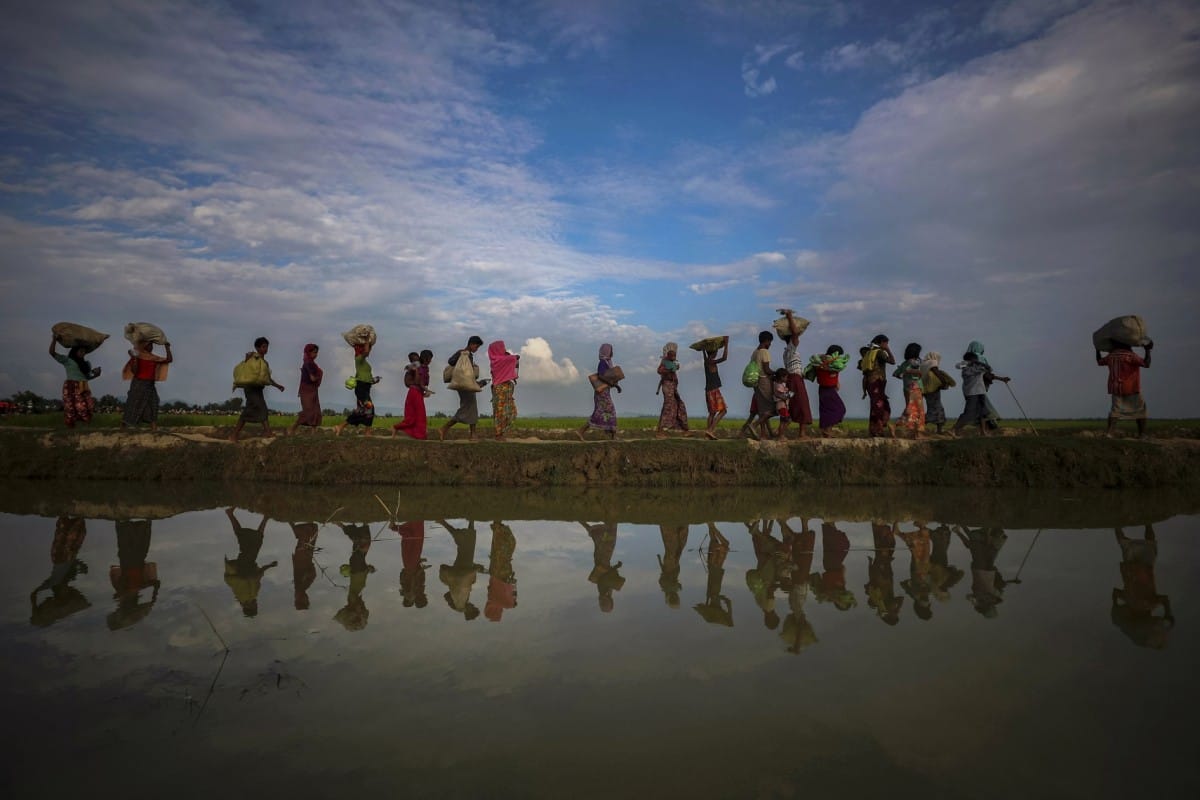
The tragedies of the Rohingya continue along the harsh migration routes from Arakan State and Bangladesh to South and Southeast Asian countries, through perilous journeys across seas, forests, and land, in search of a safe haven and a dignified life away from persecution and violence.
As the number of people fleeing increases, their suffering at the hands of human traffickers and harsh natural conditions escalates, often leading to humanitarian tragedies including death and disappearance, amid the absence of legal protection for them in most of the countries they head toward.
Perilous Journeys
Rohingya sea journeys remain among the most dangerous paths faced by this Muslim minority fleeing persecution in Myanmar and Bangladesh. In 2025, cases of drowning and missing persons at sea increased significantly.
The United Nations High Commissioner for Refugees recorded that more than 5,100 Rohingya attempted to cross dangerous maritime routes in search of safety in Asia, while an estimated 600 people died or went missing in the waters of the Malacca Strait and the Andaman Sea during the same year.
In late November 2025, the region witnessed a tragic incident when a boat carrying about 70 Rohingya sank near the maritime border between Thailand and Malaysia, resulting in the deaths of 11 people, including two children, while the fate of dozens of others remains unknown amid extensive search operations.
May 2025 was among the deadliest months on this route, when two vessels carrying around 427 Rohingya refugees sank off the coasts of Myanmar and Bangladesh—an incident described by human rights organizations as “one of the deadliest Rohingya sinking incidents of 2025.”
Smugglers’ Extortion
The danger of the journey is reflected not only in the harsh nature of the seas and forests they cross, but also in their exploitation by smuggling networks.
A statement issued by Rohingya organizations indicates that the continued drowning incidents reflect a worsening humanitarian situation that cannot be separated from the activities of human traffickers and smuggling groups that exploit refugees’ needs by charging them for transport in unseaworthy boats, with promises of reaching safe havens via targeted waters or land routes.
According to joint reports by the International Organization for Migration and human rights organizations, smuggling networks deliberately overload boats beyond their capacity or operate them without safety equipment, making them prone to breakdowns and sinking.
Migrants’ families are also subjected to financial extortion, being asked to pay additional sums to ensure the continuation of the journey or to secure the release of their relatives if boats break down or passengers are detained.
An Uncertain Fate Upon Arrival
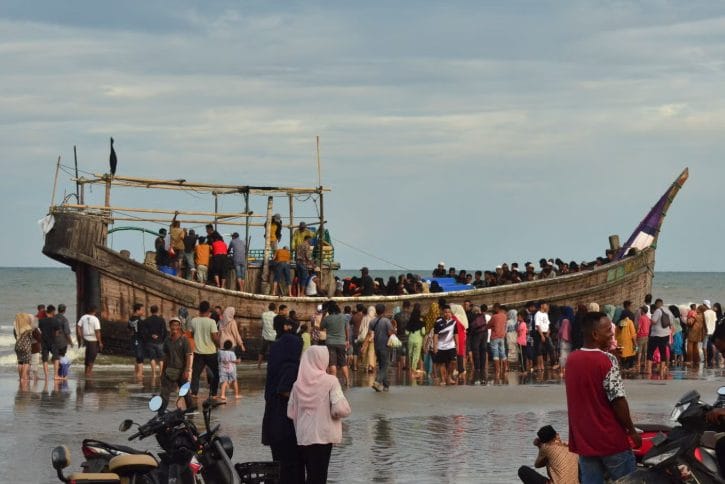
Even upon reaching land, the suffering of the Rohingya does not end. In Indonesia, several boats arrived on the shores of Aceh Province in January 2025, where one boat broke down off the coast, prompting authorities to detain the migrants and investigate their identities amid concerns over the danger of the vessels provided by smuggling networks.
Despite the arrival of some refugees at ports such as those in Indonesia, they face difficulties in obtaining recognition of their legal status and the absence of an established asylum pathway in many host countries, increasing their legal and humanitarian vulnerability upon arrival.
International Organizations
The UN High Commissioner for Refugees and the International Organization for Migration, in official statements and reports, emphasize the need to intensify search-and-rescue efforts at sea, expand humanitarian response mechanisms, and provide safe alternatives for migration to reduce refugees’ reliance on smugglers and irregular routes.
International institutions stress that the continuation of the crisis without addressing root causes—such as ongoing violence in Arakan State and the denial of citizenship and basic rights in Bangladesh—will keep this deadly route for the Rohingya in place, along with the risks of drowning and dangerous land-and-sea crossings.
The major wave of Rohingya flight from Arakan State in western Myanmar began in August 2017, after Myanmar’s military (the ruling military council) launched a large-scale military campaign targeting Rohingya villages, described by the United Nations and independent international organizations as ethnic cleansing and genocide.
The campaign was launched under the pretext of responding to limited attacks, but quickly turned into systematic operations that included mass killings, the deliberate burning of villages, rape, arbitrary detention, and the stripping of residents of their property, forcing hundreds of thousands of Rohingya to flee en masse to Bangladesh within a few weeks.
The roots of the crisis go back to decades of systematic persecution against the Rohingya, who were stripped of citizenship under the 1982 Citizenship Law and subjected to severe restrictions on movement, education, employment, and healthcare, in addition to repeated waves of violence since 2012.