
Arakan News Agency
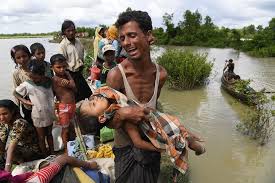
In addition to the rigidity of the migration route, the Bangladeshi authorities have delayed in the opening the border to allow them to enter, after fleeing Myanmar, as a result of violence against them by the government last year, Rohingya represented a Muslim majority in a predominantly Buddhist country, 700,000 people fled to Bangladesh.
Bangladesh’s decision to welcome the oppressed Rohingyas to protect their brethren in religion has brought more than 700,000 people, who make up 60 per cent of the Rohingyas living in Myanmar, but their stay will not last long.
Bangladesh faced the same fate as the European countries following the emigration of millions of people from the Middle East because of the tensions in their country and the political and social consequences. The only difference is that the Rohingyas migrated from the poorest country, in the region to the poorest region in another country, in addition to “Bangladesh” suffers from high population density.
One of the basic plans of humanitarian NGOs to reduce tensions between migrants and indigenous peoples, who are also suffering from poverty and destitution, is to try to involve them in the reception and assistance of new guests and to inform them that they are in their country.
Lack of health care
Many Myanmar residents suffer from chronic diseases, according to doctors in the region, as a result of their lack of access to the necessary health care, especially after the demilitarization of their country since 1982, thus losing their basic rights and services to their citizens. “Also another weapon to pressure the sons of” Rohingya “is” starvation. “
“The majority of Rohingya women do not know that their sexual assaults require a doctor to be examined,” said the volunteer doctor at MSF, Zulia. The agency revealed that 230 cases of sexual abuse were detected.
High Fertility Rates
The government is trying to stress that “Rohingya” is a threat to the Buddhist population. Data have been published indicating that fertility rates are high, 55 percent of them children, and between 60 and 100,000 Rohingya children are expected to be born this year in the refugee camps.
Despite the United Nations warning of the danger of the return of the Rohingya; but the government of “Myanmar” announced the days before the return of the first family belonging to the ethnic “Rohingya”, the government statement said it will recognize the difficulties faced by the conflict to improve the resettlement process , But did not say whether the return of this family will be followed by the return of other families or not.
The difficulty of returning under the current circumstances is the failure of the Government to build camps for such a large number of displaced persons, most of whom suffered from the burning of their homes.


