Arakan News Agency
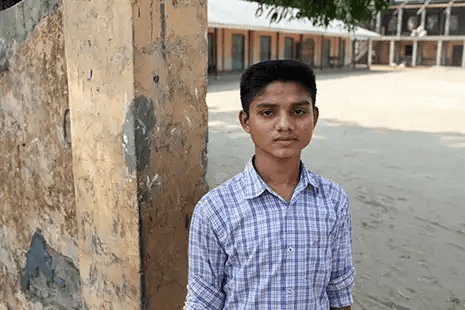
Sixteen-year-old Zaw Myint Tun wants to be an engineer. In mid-March, he sat Myanmar’s national matriculation exams in the hope of going to university and pursuing his goal.
For Zaw Myint Tun, only a score high enough to get into a university in Myanmar’s largest city, Yangon, will do. The closest university to his home in Thetkepyin village, Sittwe University — which has a lower entrance requirement — would not let him in.
Zaw Myint Tun is a member of the Rohingya ethnic group in western Myanmar’s Rakhine state, who since violent riots spread across the state in 2012 have had restrictions placed on their movement, as well as on their access to basic services and education.
His family fled their hometown of Kyaukphyu by boat, reaching the part of the Sittwe peninsula that now forms a sort of open prison of camps and villages for more than 100,000 people.
Zaw Myint Tun has already lowered his expectations from actually studying engineering, which is one of a handful of subjects, also including law and medicine, that can only be studied by Myanmar citizens. Most Rohingya, including Zaw Myint Tun, do not have citizenship as the group is not recognized as an official “nationality” in the country.
“I know I can’t do engineering at a Government Technical College, so I will take mathematics or English,” he said. “Then I will try to find a job at a construction company where I can train to be an engineer.”
If he gets onto a course in Yangon, he will likely still face difficulties. According to Muslim former students in Yangon, even non-Rohingya Muslims have faced discrimination at Myanmar universities, with degree certificates in some cases being withheld if the student cannot present a national identity card.
“I will have to get a permit from the immigration department,” said Zaw Myint Tun, who is in a better position than most Rohingya students as he has been singled out for financial support by displaced people from Kyaukphyu.
Sitting the matriculation exams alongside Zaw Myint Tun last month were 97 other Rohingya teenagers. Their school in Thetkepyin, the only public high school open to Rohingya in all of Sittwe, is just a few hundred meters, across some disused railway tracks, from Sittwe University. When those students allowed to attend the university are on their way to classes, Myanmar police officers are posted along an access road, which goes through a Rohingya neigborhood.
Source : UCA