
Arakan News Agency
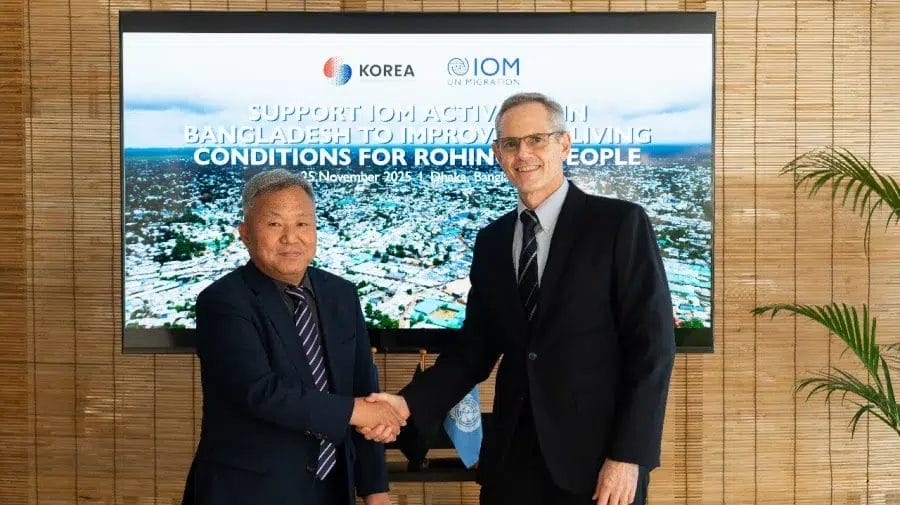
The Republic of Korea has provided $5 million to the International Organization for Migration (IOM) to improve the living conditions of over 420,000 Rohingya refugees in Cox’s Bazar camps in Bangladesh.
According to the Bangladeshi newspaper Dhaka Tribune, the funding will help provide water, sanitation, and hygiene (WASH) services across seven camps, as well as ensure access to clean cooking fuel for 41,500 refugee families in 17 camps through the regular distribution of liquefied petroleum gas (LPG).
The IOM stated that the support will improve the safety and reliability of water and sanitation facilities, promote hygiene awareness, and provide comprehensive and safe services for vulnerable groups, including women, girls, the elderly, and persons with disabilities.
Providing LPG will also help reduce deforestation and health risks, while limiting the exposure of women and girls to gender-based violence when collecting firewood.
Park Young-sik, the Korean ambassador to Bangladesh, emphasized his country’s continued humanitarian commitment to the Rohingya, noting that this new contribution is part of a broader support package that includes $10 million in funding and a large shipment of rice.
Lance Bonneau, Head of Mission of IOM in Bangladesh, praised Korea’s ongoing support, affirming that the contribution will enhance the safety, dignity, and resilience of communities relying on humanitarian aid for their daily needs.
Recently, the Republic of Korea donated a massive 20,265 tons of rice to the Bangladesh government and the World Food Programme (WFP) to support over 1.1 million Rohingya refugees living in the camps, covering their food needs for nearly two months.
Previously, Korea provided a $5 million contribution in October to support the United Nations High Commissioner for Refugees (UNHCR) in delivering humanitarian assistance and basic protection to the Rohingya.
Bangladesh hosts nearly 1.3 million Rohingya refugees in the Cox’s Bazar camps, which the United Nations classifies as the largest refugee settlement in the world. The refugees have lived in difficult humanitarian conditions since fleeing Myanmar in 2017 due to the military’s “genocide campaign,” and new waves of displacement have occurred since fighting erupted in Rakhine State between the Myanmar military and the Buddhist Arakan militias (Arakan Army) in November 2023.


