
Arakan News Agency
Myanmar leader Aung San Suu Kyi said her government won’t place blame for violence involving the country’s Rohingya minority before investigators have gathered all the evidence.
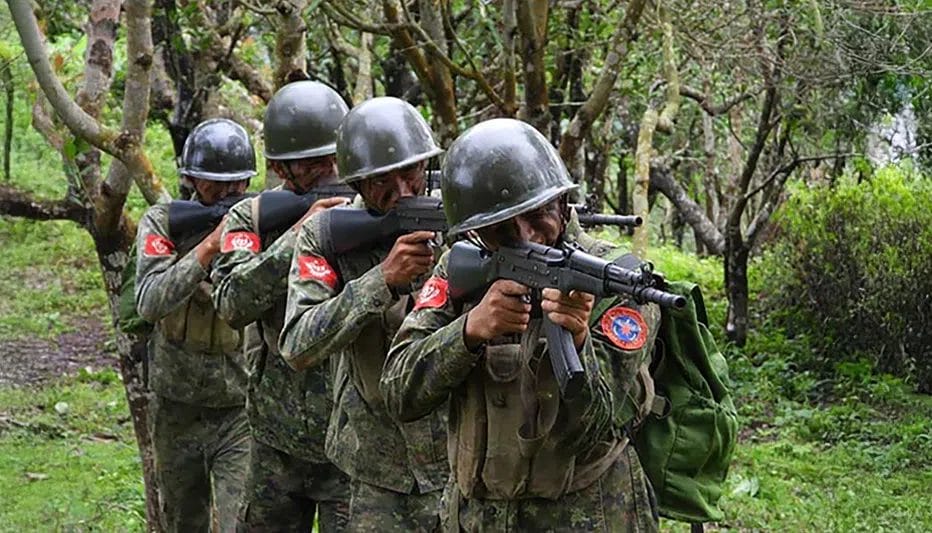
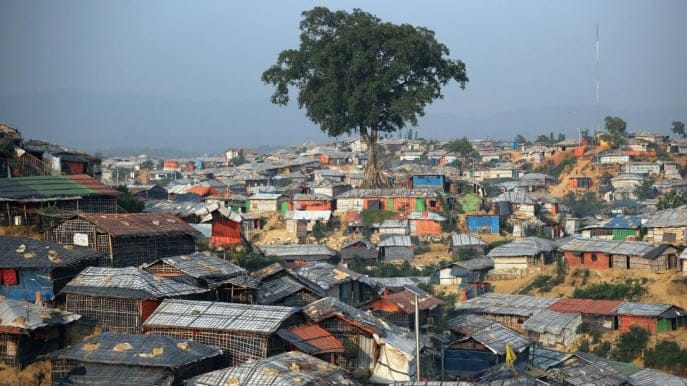
Tensions have run high in Buddhist-majority Myanmar’s Arakan state since the recent violence a month ago, leaving nine police and eight attackers dead. Reprisals against Muslim Rohingyas have followed in the area around Maungdaw, Human Rights Watch and other agencies said, raising fears of a repeat of 2012’s sectarian violence that killed over 100 Rohingyas. More than 100,000 Rohingyas still live in squalid camps, denied citizenship by the government.
Speaking to reporters in Japan, where she is winding up a five-day visit, Ms. Suu Kyi said her government has been “very careful not to blame anybody in particular unless we have complete evidence as to who has been responsible for what,” the Associated Press reported.
The clashes complicate Ms. Suu Kyi’s efforts to ease ethnic tensions that have flared since Myanmar began opening up to the world half a decade ago.
The Nobel Peace Prize laureate, whose National League for Democracy swept to power in elections a year ago, is the country’s de facto leader, carrying the title of state counselor. In recent months she has attempted to drum up more foreign investment in the country. In Japan this week, Prime Minister Shinzo Abe pledged $7.7 billion in public and private support for development in Myanmar after meeting with Ms. Suu Kyi.
But Ms. Suu Kyi has struggled to address criticism over the way Muslims, and especially the Rohingya minority, are treated. Recently she appointed former United Nations Secretary General Kofi Annan to lead a panel to explore solutions to the strife in Arakan state.
Earlier this week Myanmar’s military escorted a team of U.N. representatives and foreign diplomats, including the U.S. ambassador, to Arakan state’s north, where the recent clashes occurred. The U.N. resident and humanitarian coordinator in Myanmar, Renata Dessallien, said the visit was “a first step to greater access for humanitarian assistance” and urged a credible and transparent investigation into alleged human-rights abuses.