Arakan News Agency | Exclusive
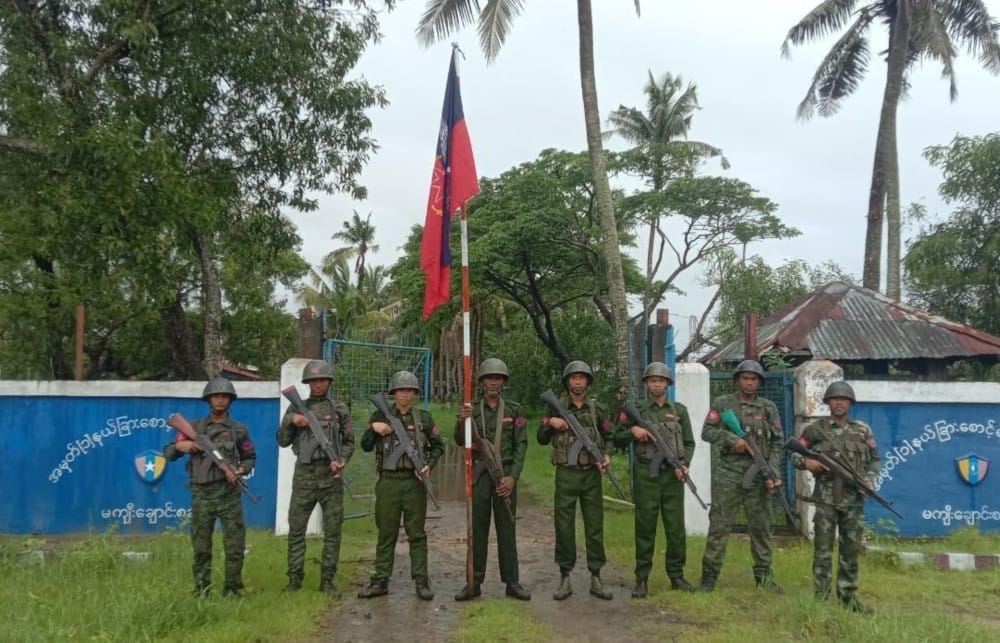
The Arakan Army (AA), a separatist group, has imposed a complete ban on the movement of Rohingya in the northern part of Maungdaw town, in western Myanmar’s Arakan State, after revoking travel permits on April 29 that previously allowed limited movement between villages.
According to the Arakan News Agency correspondent, this measure has turned Rohingya villages into open-air prisons, dramatically increasing the risk of a humanitarian disaster, as confirmed by local residents.
Speaking to the agency, residents said they are now unable to access food after all movement and trade were halted. One of them said, “During the permit period, we managed to secure two meals a day. Now, we are facing severe food shortages.”
The Arakan Army justified its decision by citing security concerns related to the activities of the Arakan Rohingya Salvation Army (ARSA), even though the blockaded villages are located about 10 miles away from active combat zones.
On April 26, an AA political officer named Aung Paw visited Ngan Chaung village and informed Rohingya community leaders of the need to cooperate in identifying any ARSA elements, alleging the presence of local supporters among the Rohingya. He instructed them to report any ARSA entry immediately.
He added that, due to the difficulty in distinguishing between civilians and fighters, movement would be restricted, and a strict curfew from 6 p.m. to 6 a.m. would be enforced.
The restrictions affected numerous villages including Thu U Hla, Ngan Chaung, Nga Sar Kyu, Pwint Pyu Chaung, Kyarr Khawng Taung, Nga Khu Ya, Kyet Yoe Pyin, and Oo Chain Kya, cutting them off entirely from neighboring villages such as Kyauk Hle Kha, Thar Yet Oak, Myinglar Gyi, Ywet Nyo Taung, and Pyin Phyu. Even the old internal routes are no longer accessible, according to local testimonies.
Since the Arakan Army took full control of Maungdaw on December 8, it has escalated abuses against the Rohingya, including the closure of homes based on false reports, the confiscation of valuables, forced evictions, and the resettlement of ethnic Rakhine families in Rohingya villages.
It has also enforced movement restrictions through a network of security checkpoints at every village entrance and exit, imposed levies, seized food supplies, and started collecting heavy taxes on Rohingya shops, livestock, and poultry.