Arakan News Agency
The seminar was attended by Dr. Kamal Bureka, Supervisor of the English Language Unit at Al-Azhar Observatory, and Dr. Reham Abdullah, Supervisor of the Urdu Language Unit at Al-Azhar Observatory.
He pointed out that the crisis of the Rohingya Muslims began since the British occupation of Myanmar, where a policy of divide and rule was applied to incite religious fanaticism. The rule of law was lost. Political parties began to openly broadcast hate speech and divided the mutual essence of religions in love and respect.
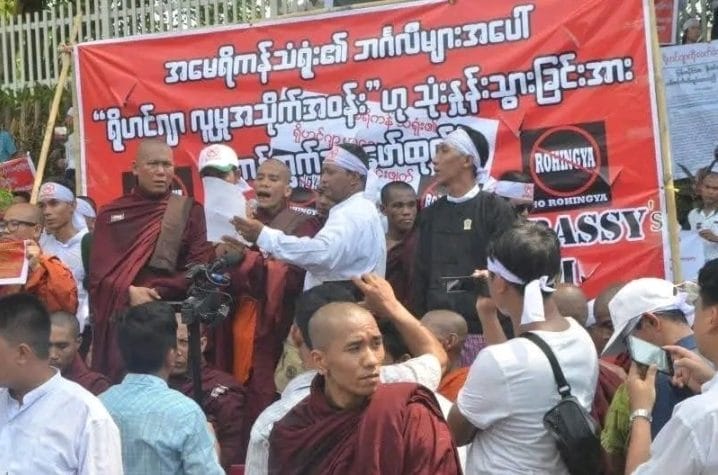
The religious dimension is one of the most important reasons for the persecution of the Rohingya. The extremist Buddhist groups are one of the most important forces that can not be overcome in this equation. They issue laws permitting the killing of Muslims and carrying out terrorist acts, but at the same time exporting the issue as a religious issue does not serve the interests of Muslims and does not guarantee the sympathy of the world with them, but the issue should be exported as a moral humanitarian issue, to mobilize the international community to stop this genocide against Muslims.
He stressed that the Grand Imam Dr. Ahmed al-Tayeb, Sheikh of Al-Azhar, was keen to attend all the meetings of the conference held by Al-Azhar in January 2017 to limit the suffering of the Muslims of Burma, and also held a closed session with all representatives of religious communities, stressing that Al-Azhar did not forget the Muslims of Rohingya, Their crisis.
In the same context, Dr. Reham Abdullah, supervisor of the Urdu Language Unit at the Al-Azhar Observatory, said that the Rohingya crisis is the result of their being stripped of citizenship. The authorities regard them as Bengalis, although they have been in Myanmar for generations and have been described by the United Nations as the most oppressed people in the world. Which they are exposed to in Burma, neighboring countries do not want to shelter them.
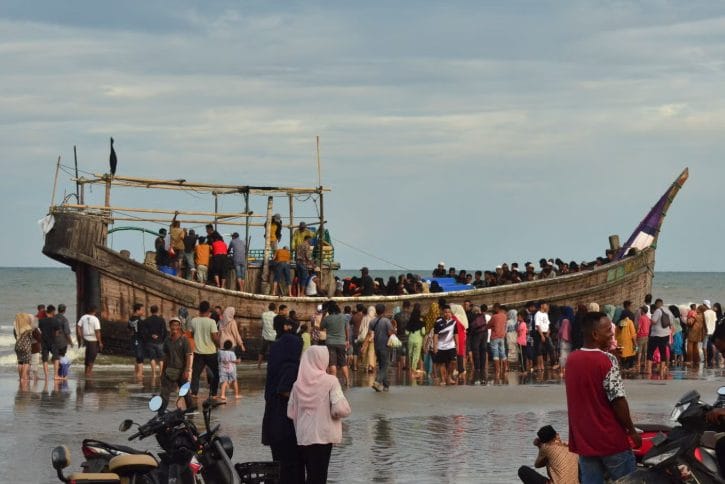
In November, the Grand Imam sent a relief mission from Al-Azhar and the Council of Muslim Elders to provide relief and humanitarian aid to the Rohingya camps in Bangladesh to alleviate the suffering of hundreds of thousands of refugees who had fled to neighboring Bangladesh to escape repression and persecution in Myanmar.