
Arakan News Agency
A new tragedy has hit the Rohingya refugees, the disease of “diphtheria”, another threat to the Muslim minority. The outbreak began in the vast camps in Bangladesh in November shortly after the arrival of hundreds of thousands of Rohingya.
The outbreak appeared to have peaked with the New Year approaching, but there is renewed concern now that the disease, which may cause death, may continue to spread, according to the media.
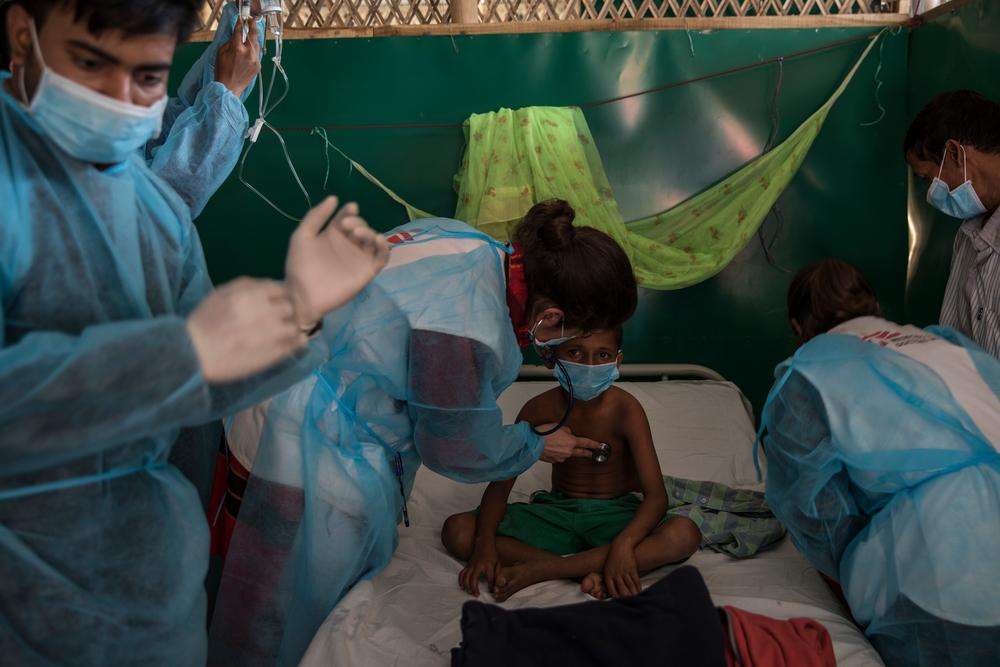
“Yesterday was a very busy day for us,” Dr. Andy Doyle said earlier this week at the Samaritan Bortes Dermatology Center in Baluchali refugee camp. He pointed out that 117 patients had been screened for diphtheria and that this was the highest number they had ever seen.
Doyle and his team only deal with TD at this facility, so the first thing the staff do is check the patient for the disease and make sure it is not just bad cold.
There is no presence of diphtheria in the West because almost everyone is vaccinated against the disease. Doyle said the disease was easy to identify. The patient had high fever, sore throat and often nose and acute inflammation in the back of his throat.
Doyle said that sometimes patients suffer from swelling in their necks, especially children , which is called the neck of the bull, and these are signs that the airway is in imminent danger which doctors are looking for.
In this way diphtheria causes death, as the neck swells and a membrane in the throat is formed to prevent breathing.
As of mid-January, there were approximately 5,000 reported cases of diphtheria in the camps and 33 deaths, a much lower mortality rate than in the past. This may be due to patients’ rapid access to health care in the clinics that appeared in the camps.
Simple cases of diphtheria can be treated with antibiotics, but if the airway is susceptible to blockage, the patient is given an anti-toxin via intravenous procedure to eliminate a toxin made by bacteria, but the antitoxin is likely to cause a fatal reaction.
Doyle says the antidepressant treatment is difficult and time-consuming, and as he points to a nurse sitting next to a sick bed indicating that the nurse will be sitting there, she watches for the slightest indication that an allergic reaction is about to begin.
Public health officials are seriously concerned about the vulnerability of hundreds of thousands of Rohingya refugees to diphtheria and other infectious diseases. Refugees are crammed into temporary shelters, and toilets and water wells have been drilled indiscriminately throughout the camps and often next to each other.
MSF project coordinator Marcella Kerai said another major factor was putting the Rohingya at risk, lacking even the most basic vaccinations when they were in Myanmar.
There is a large outbreak of measles, and there is the largest outbreak of diphtheria in the world in a long time, she said, pointing to poor Rohingya access to health care, and some Rohingya have not visited a clinic.
Humanitarian groups have launched a massive campaign to try to face that long history of medical neglect. Health workers from international non-profit organizations and the Bangladeshi Ministry of Health are trying to vaccinate about 1 million people in and around refugee camps against diphtheria and other vaccine-preventable diseases.
However, vaccination of the diphtheria vaccine is difficult. It requires three injections usually spaced several months. Health officials introduced the first round of diphtheria vaccines at the end of December and hope to deliver the last two rounds in the coming weeks.
Until that happens, there are hundreds of thousands of vulnerable targets in the camps.


