Arakan News Agency
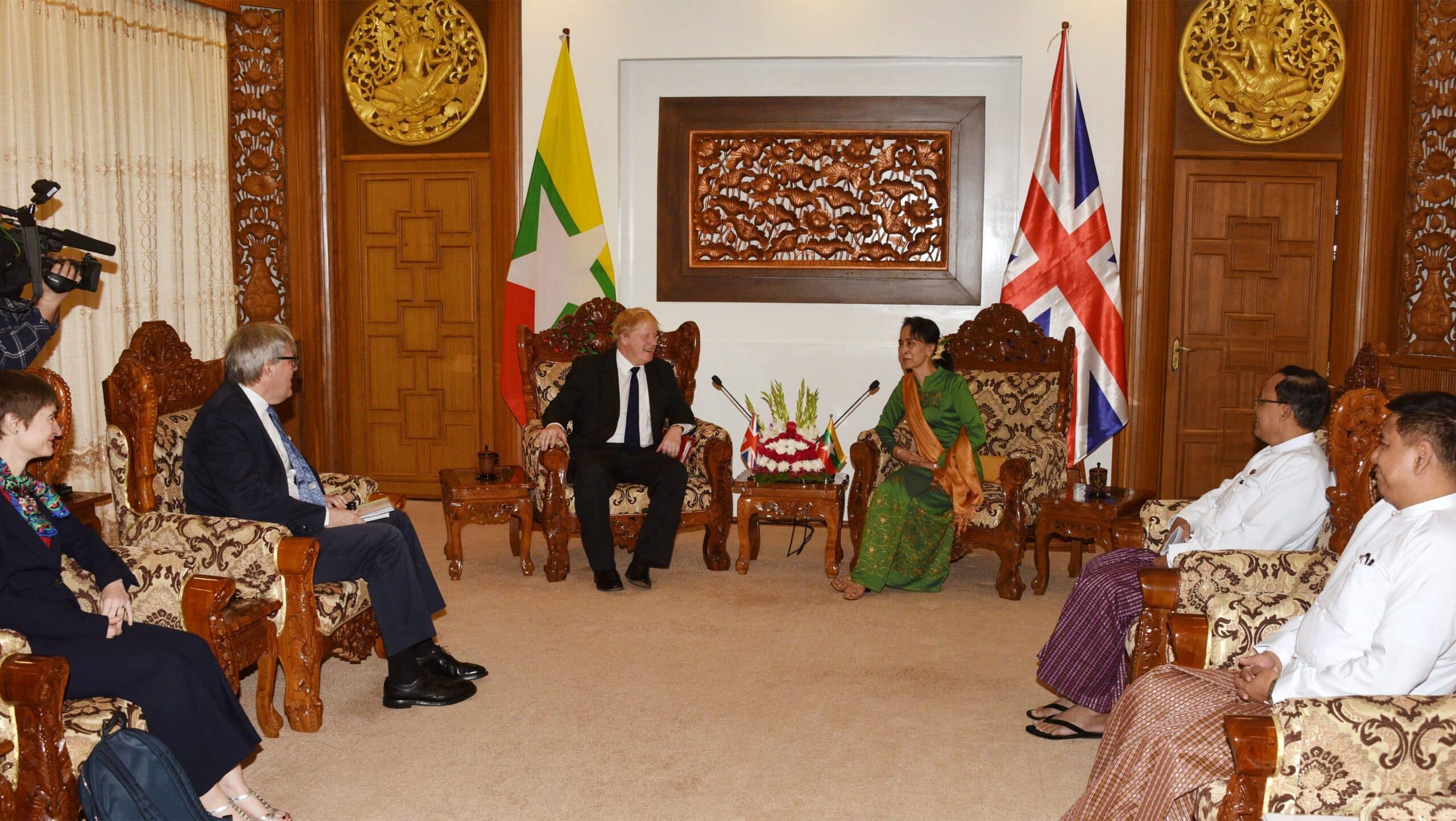
UK Foreign Secretary Boris Johnson says he doubts Myanmar’s de facto leader Aung San Suu Kyi “understands the full horror” of the Rohingya refugee crisis.
“I don’t think she’s been up in a helicopter to see what we have seen,” Mr Johnson told the BBC after talks in the capital Nay Pyi Daw.
He urged Ms Suu Kyi to work with UN agencies to help the refugees return.
Violence in Myanmar’s Arakan state has caused about 700,000 Rohingya to flee to Bangladesh since last August.
Asked by the BBC’s Reeta Chakrabarti if he believed the authorities in Myanmar – also known as Burma – were in a state of denial about the crisis, Mr Johnson replied: “I have to say that, talking to politicians in the capital, listening to Daw Suu [Aung San Suu Kyi] I don’t think it has come through to her the full extent of the horror that has happened, the sheer devastation.”
He added: “I have seen nothing like it in my lifetime. Hundreds of villages torched. It is absolutely devastating and I think that what is needed now is some leadership, working with the UN agencies to get these people back home.”
On Saturday, Mr Johnson met members of the Bangladeshi government and visited refugee camps on the border.
He said he had told Ms Suu Kyi of “the terrible conditions” of the refugees “and my deep concern about their future”.
“I underlined the importance of the Burmese authorities carrying out a full and independent investigation into the violence in Arakan, and to hold to account those responsible for human rights violations.”
Mr Johnson said he had also stressed the need to make Arakan state “a safe place for the Rohingya refugees to return to, free from fear, and in the knowledge that their basic rights will be respected”.
Mr Johnson said the UK would continue to use its global influence “to find a way to provide a better future for the Rohingya community”.
Myanmar’s foreign ministry said the pair had “discussed in an open and friendly manner the latest developments in Arakan State, including planning for the reception of returnees who fled”.
After visiting the Cox’s Bazar camp in Bangladesh, home to more than 500,000 refugees, Mr Johnson said the “horrendous living conditions” had strengthened his commitment to finding a solution.
After meeting Bangladeshi Prime Minister Sheikh Hasina and Foreign Minister Abul Hassan Mahmud Ali, he said: “I was really struck by how Bangladesh and the UK really share a common analysis of what needs to be done.”
The United Nations has described the exodus of Rohingya people from Arakan state, and the military offensive that sparked it, as a “textbook example of ethnic cleansing”.
Bangladesh has agreed a timeframe with Myanmar for repatriating Rohingya people.
But aid agencies have expressed concern over the projected figures for the transfer – Myanmar has agreed to accept 1,500 Rohingya each week; Bangladesh says it aims to return everyone within two years.
And the refugees are worried about the conditions and their rights upon their return.
Britain is one of the biggest direct donors of aid for the humanitarian effort to help the refugees.
The foreign secretary’s trip to Bangladesh is the first such official visit in a decade.
He will go on to Bangkok, Thailand, for talks with Prime Minister Prayut Chan-o-cha.